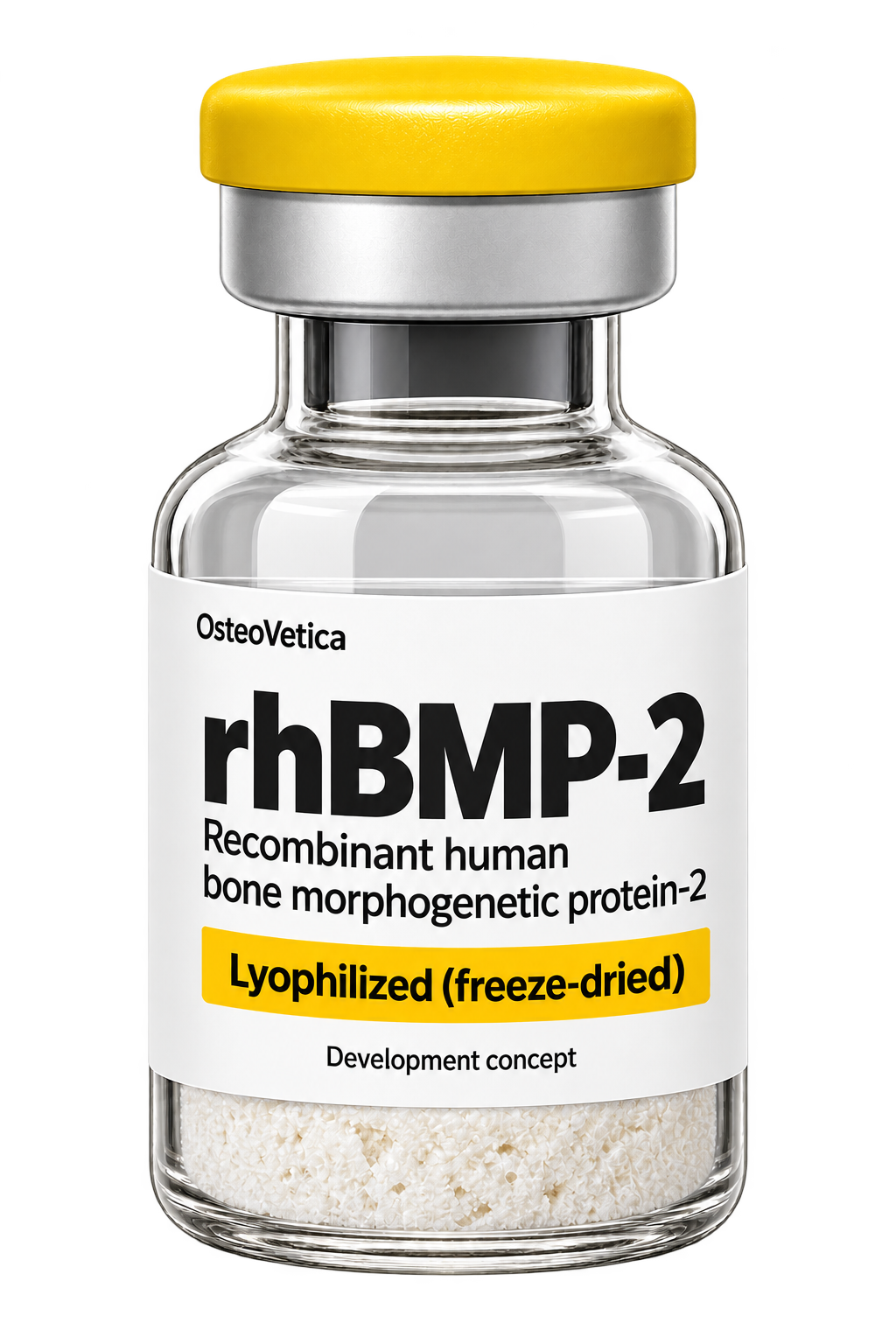
Plant-produced rhBMP-2
Recombinant human BMP-2 expressed in plants and purified, proposed as a freeze-dried protein for reconstitution. It provides the biological signal intended to stimulate bone formation.

Plant-based biotechnology
OsteoVetica is exploring the use of plant-produced recombinant human BMP-2 for bone regeneration and skeletal repair, with potential applications in dental, oral/maxillofacial, and orthopaedic procedures.
The Problem
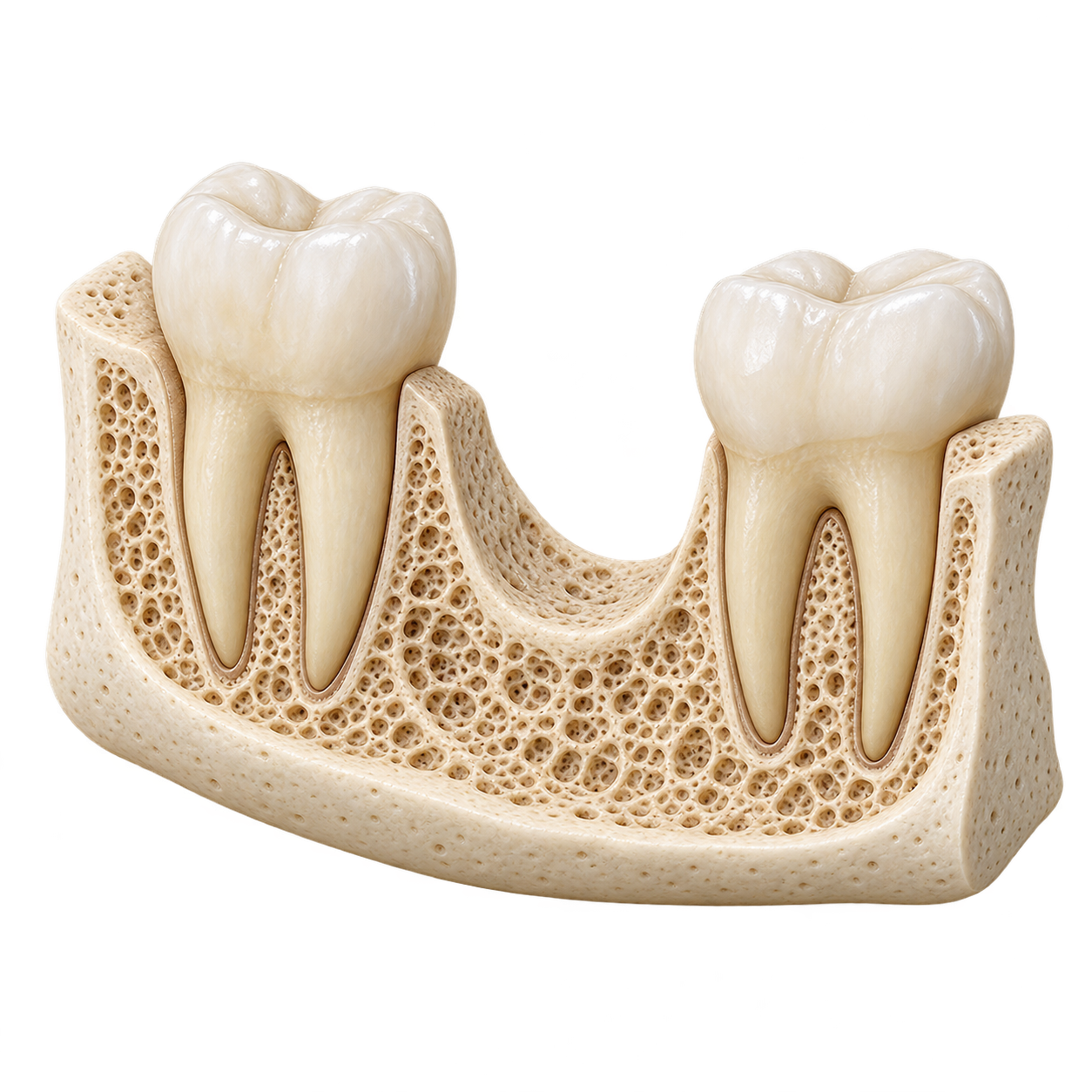
Following tooth loss, injury or disease, insufficient jawbone can limit dental implant placement.
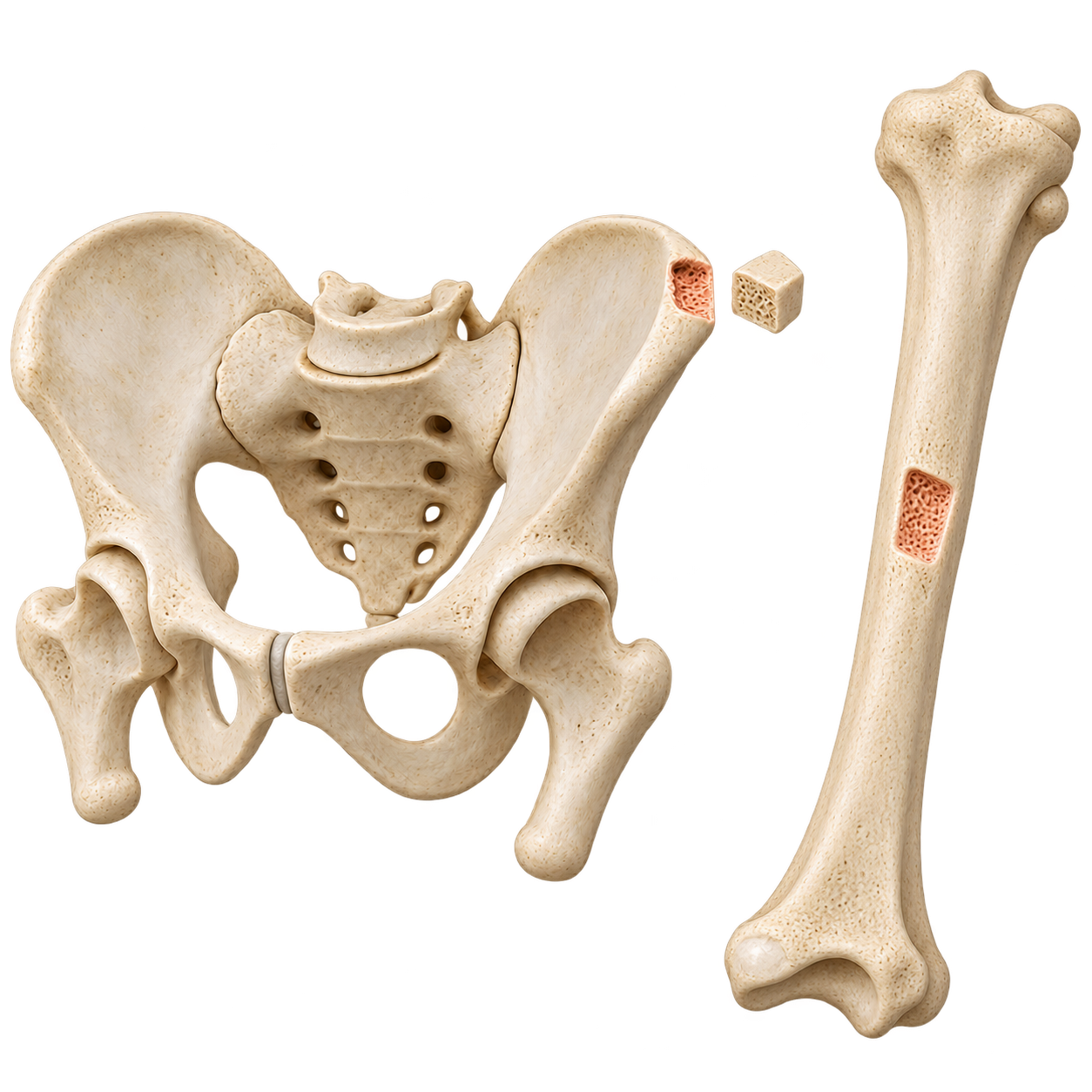
Using the patient’s own bone may require an additional procedure, with associated pain and donor-site complications.
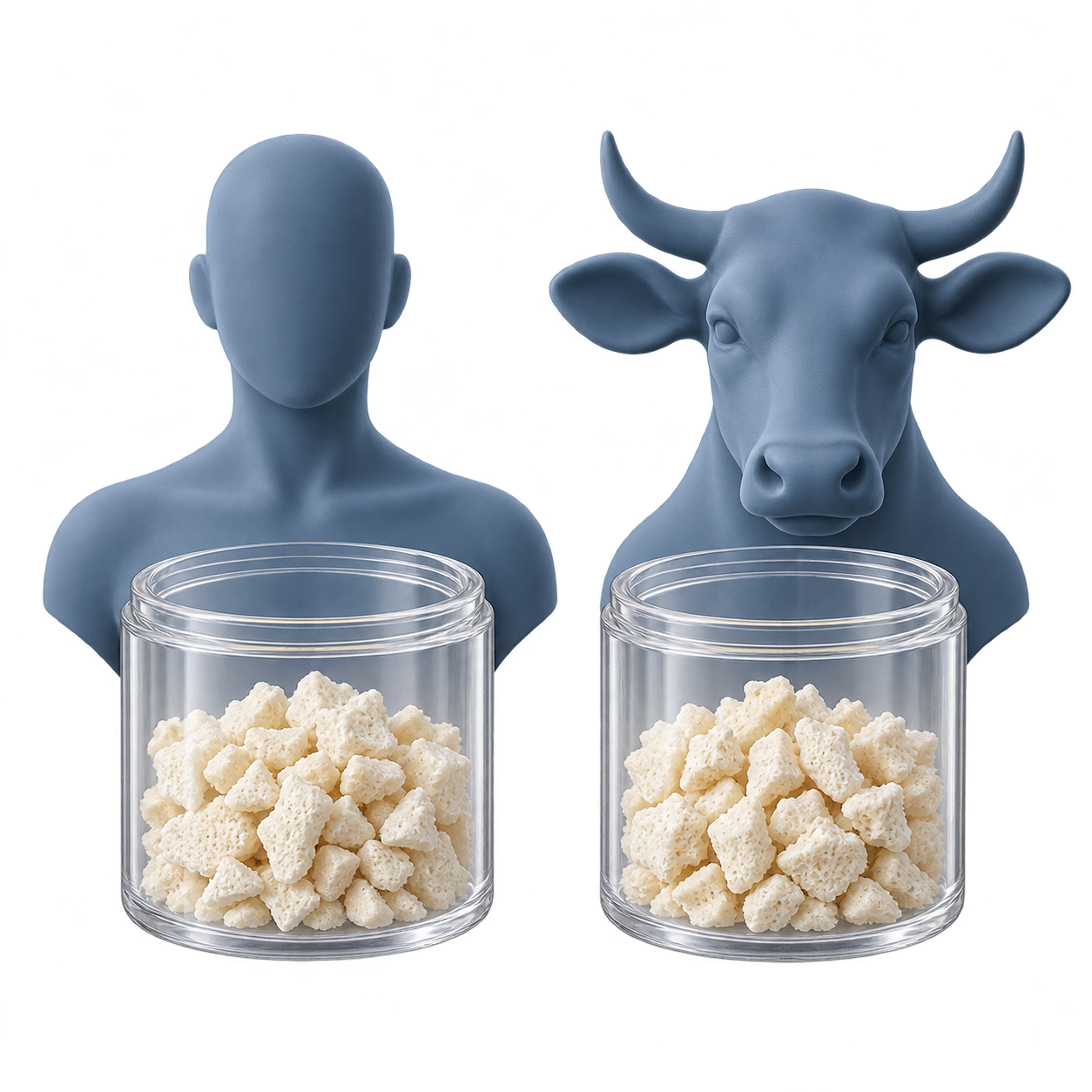
Human and animal-derived graft materials involve sourcing, screening and patient-acceptance considerations.
Can we stimulate the body to form new bone, rather than relying solely on transplanted graft material?
Our Solution
A growth factor that drives the differentiation of responsive cells into bone-forming cells.
The intended product will deliver rhBMP-2 locally at the surgical site on a suitable carrier to stimulate new bone formation.
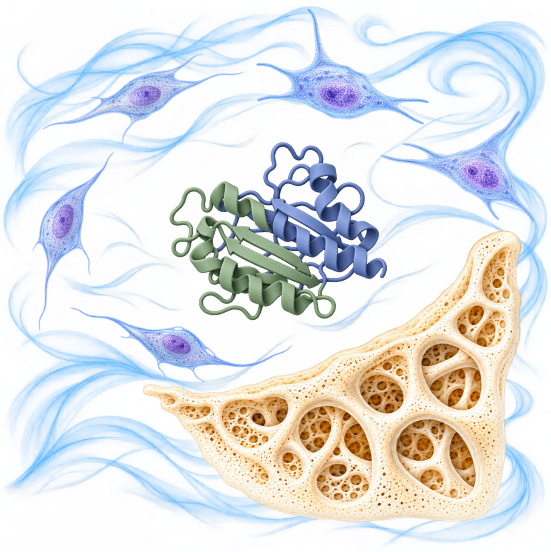
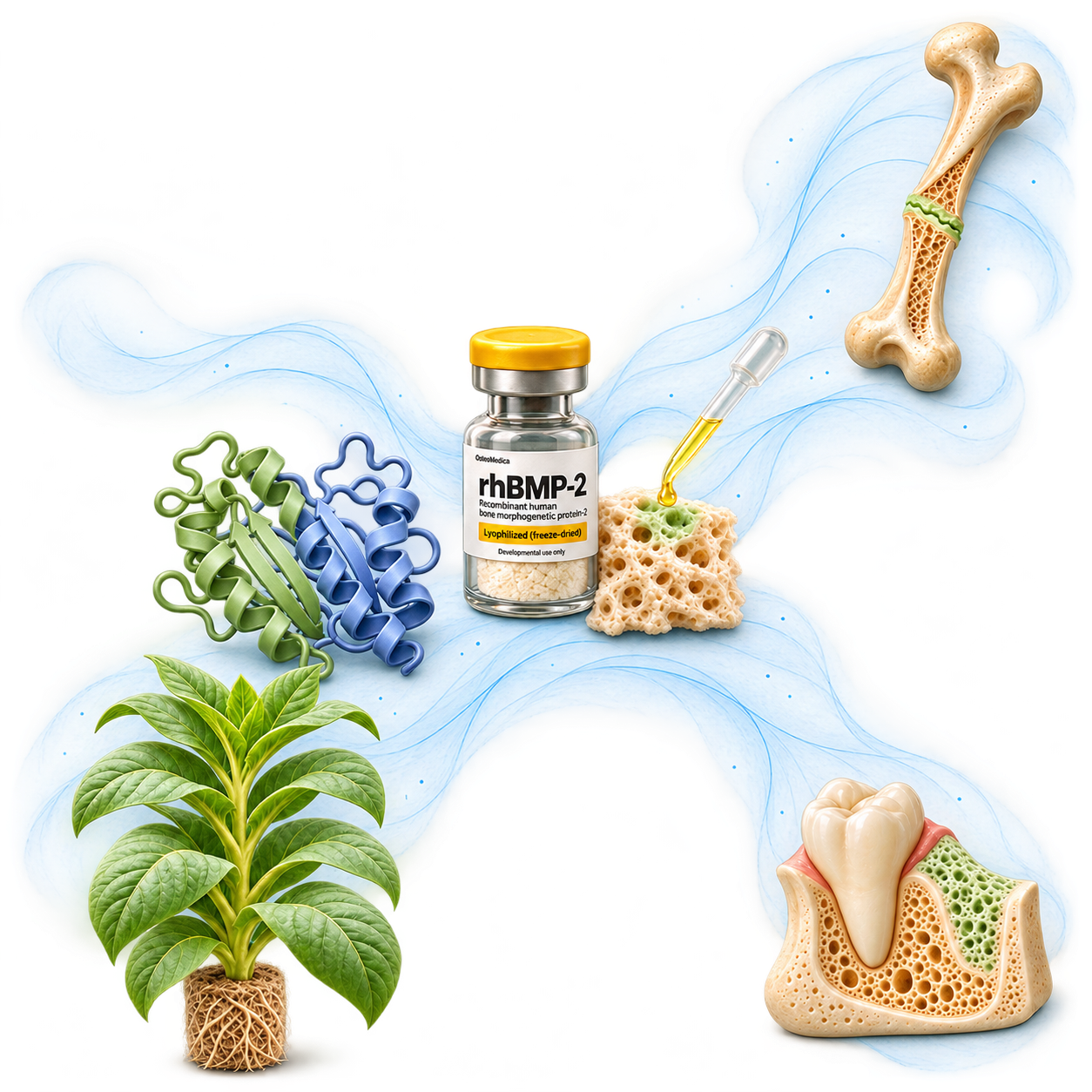
From Plant to Proposed Product
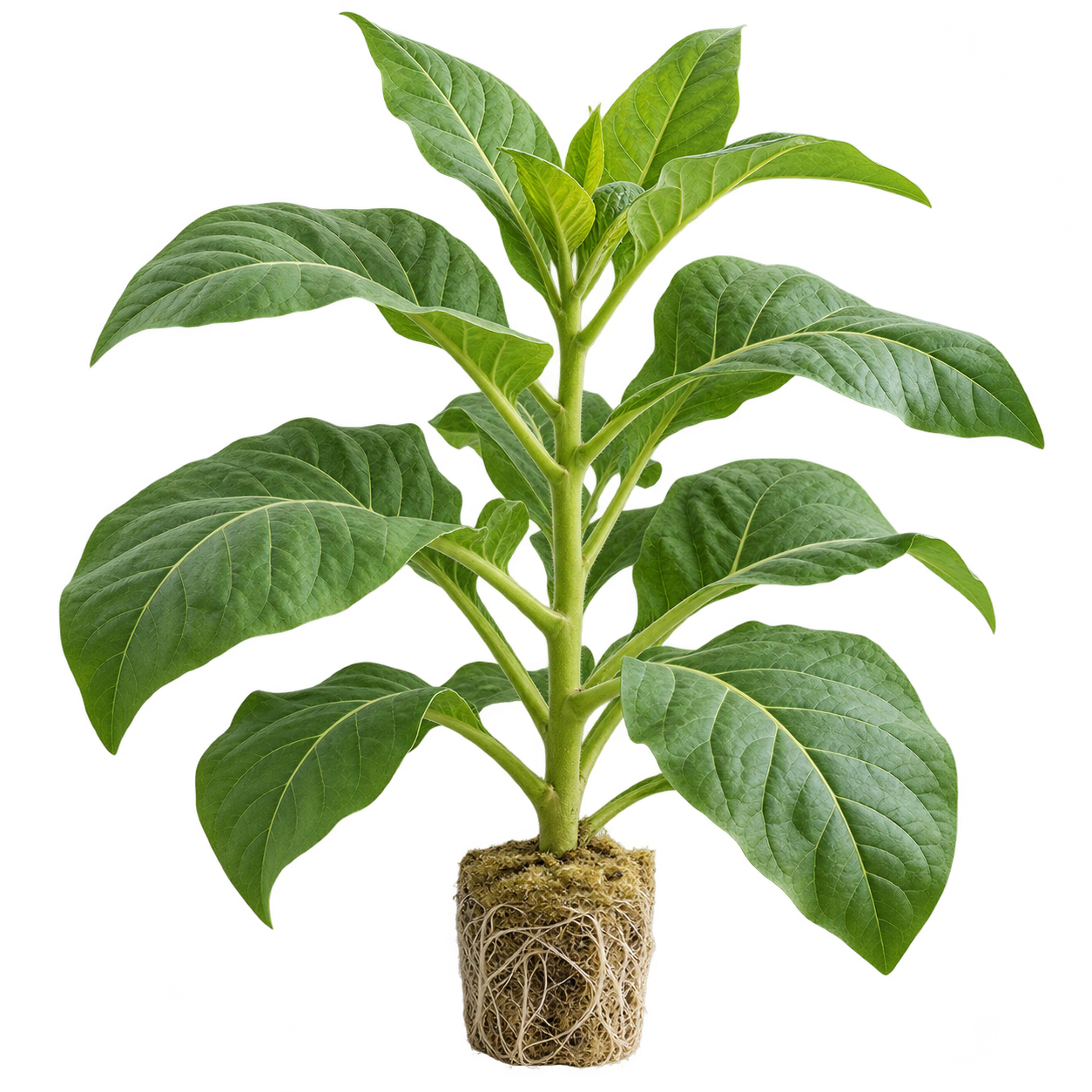
Transgenic plants cultivated under controlled conditions would provide leaf biomass for protein production.
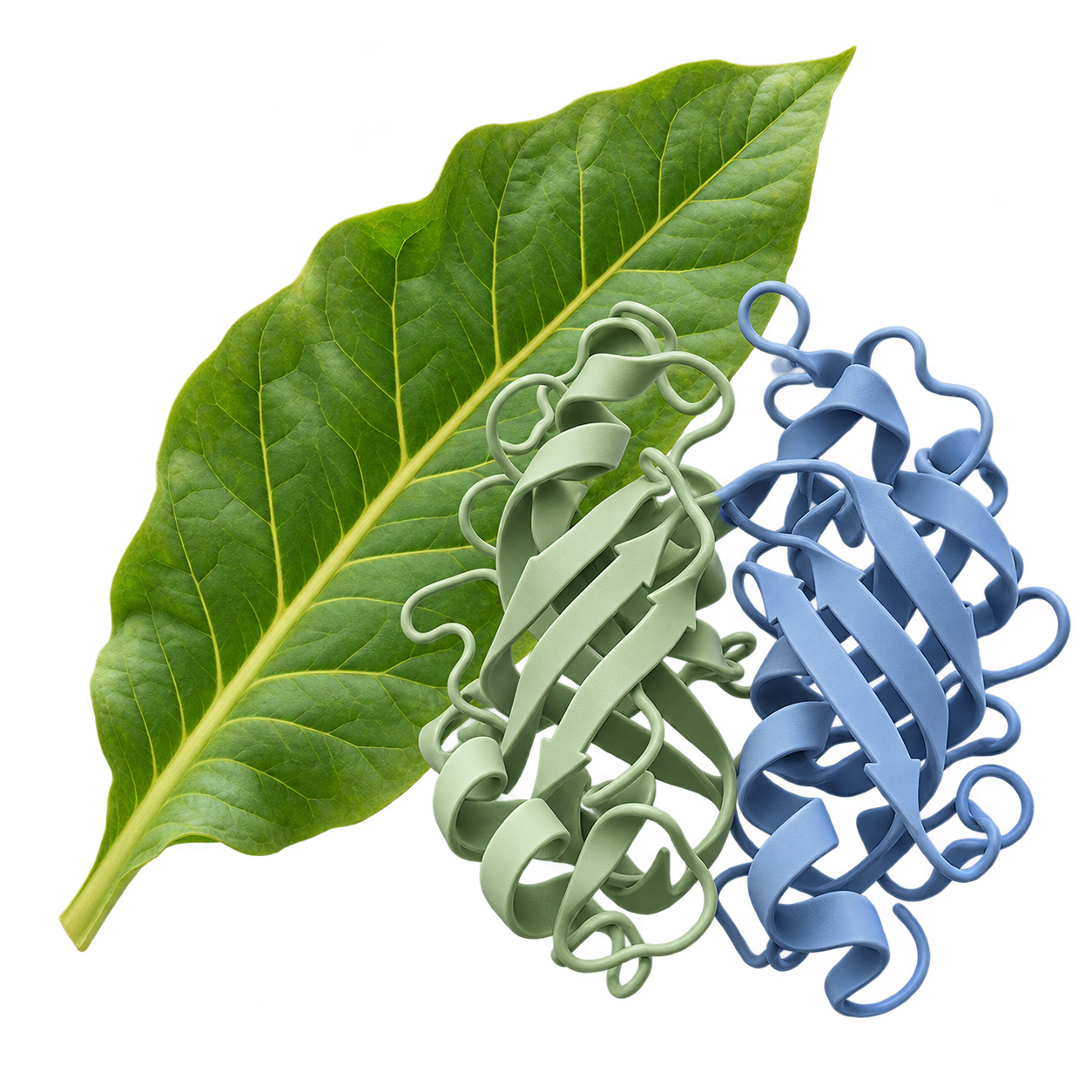
Investigate the expression of recombinant human BMP-2 in plants, followed by extraction and purification.
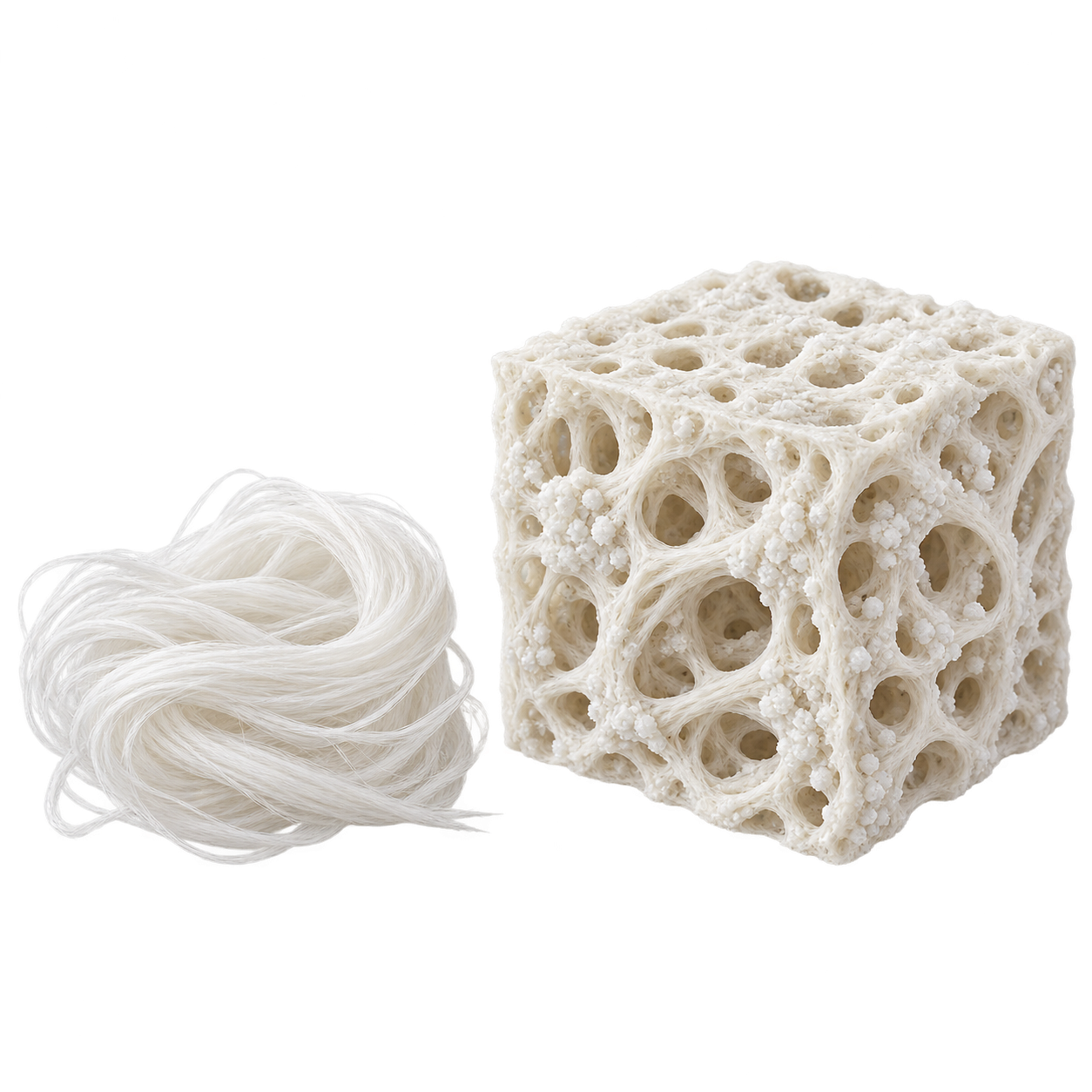
Assess recovery of cellulose from residual plant biomass and its combination with a suitable mineral component to create a porous scaffold.
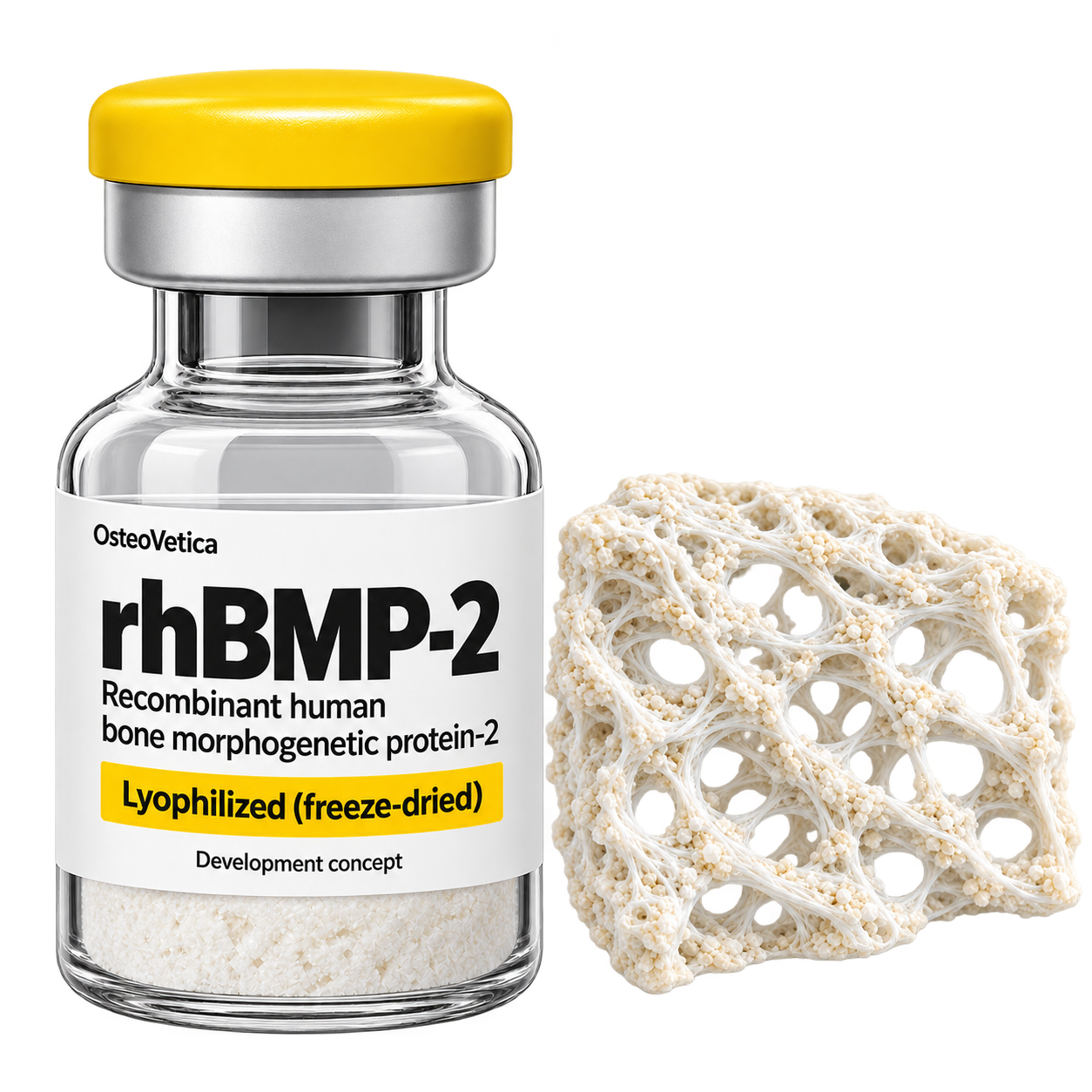
A vial of purified rhBMP-2 paired with a cellulose–mineral scaffold for local delivery. The design aims to exclude animal-derived materials.
Explore the use of plant biomass for both the bone-forming signal and its supporting scaffold.
Proposed development concept. Protein activity, material suitability, manufacturing feasibility, safety and performance require validation.
Product Composition
Recombinant human BMP-2 expressed in plants and purified, proposed as a freeze-dried protein for reconstitution. It provides the biological signal intended to stimulate bone formation.
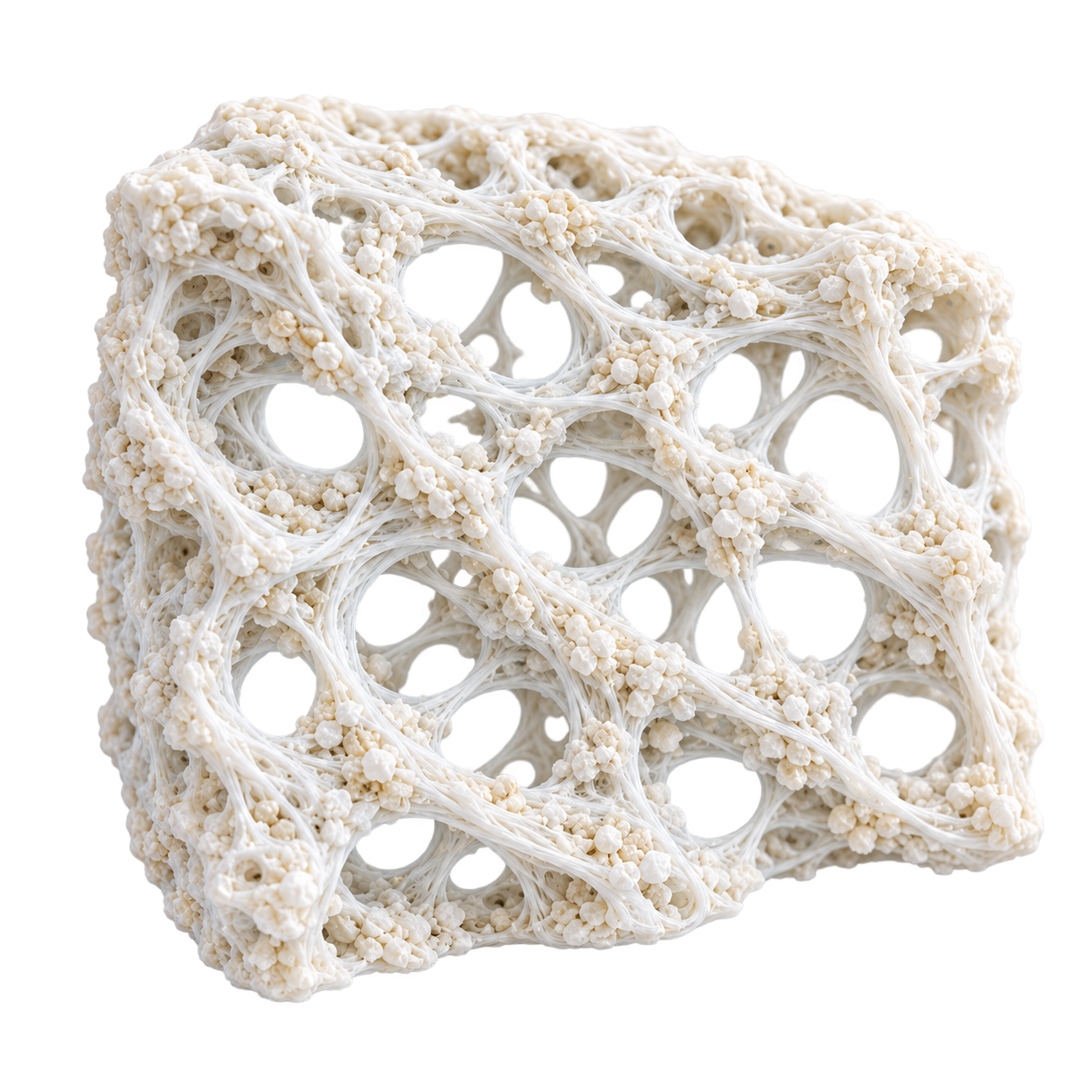
A proposed framework intended to carry the protein, occupy the defect and support tissue ingrowth. Its composition, protein retention and degradation behaviour would be evaluated during development.
Specific product concept within the broader OsteoVetica programme.
Proposed product design. Final formulation and performance remain subject to validation.
Preparation and Application
Prepare the freeze-dried rhBMP-2 using a suitable sterile diluent.
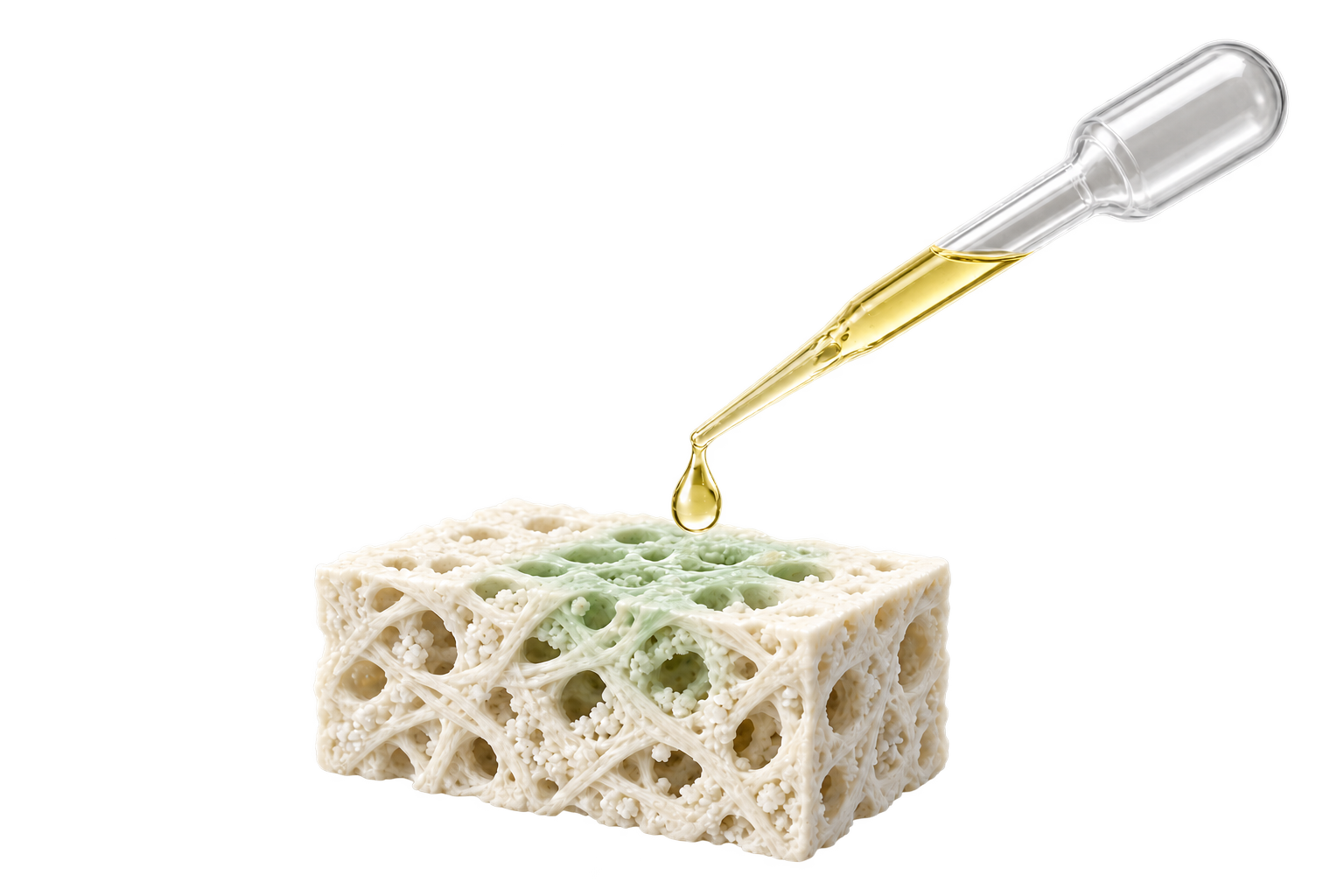
Apply the reconstituted protein solution to the scaffold.
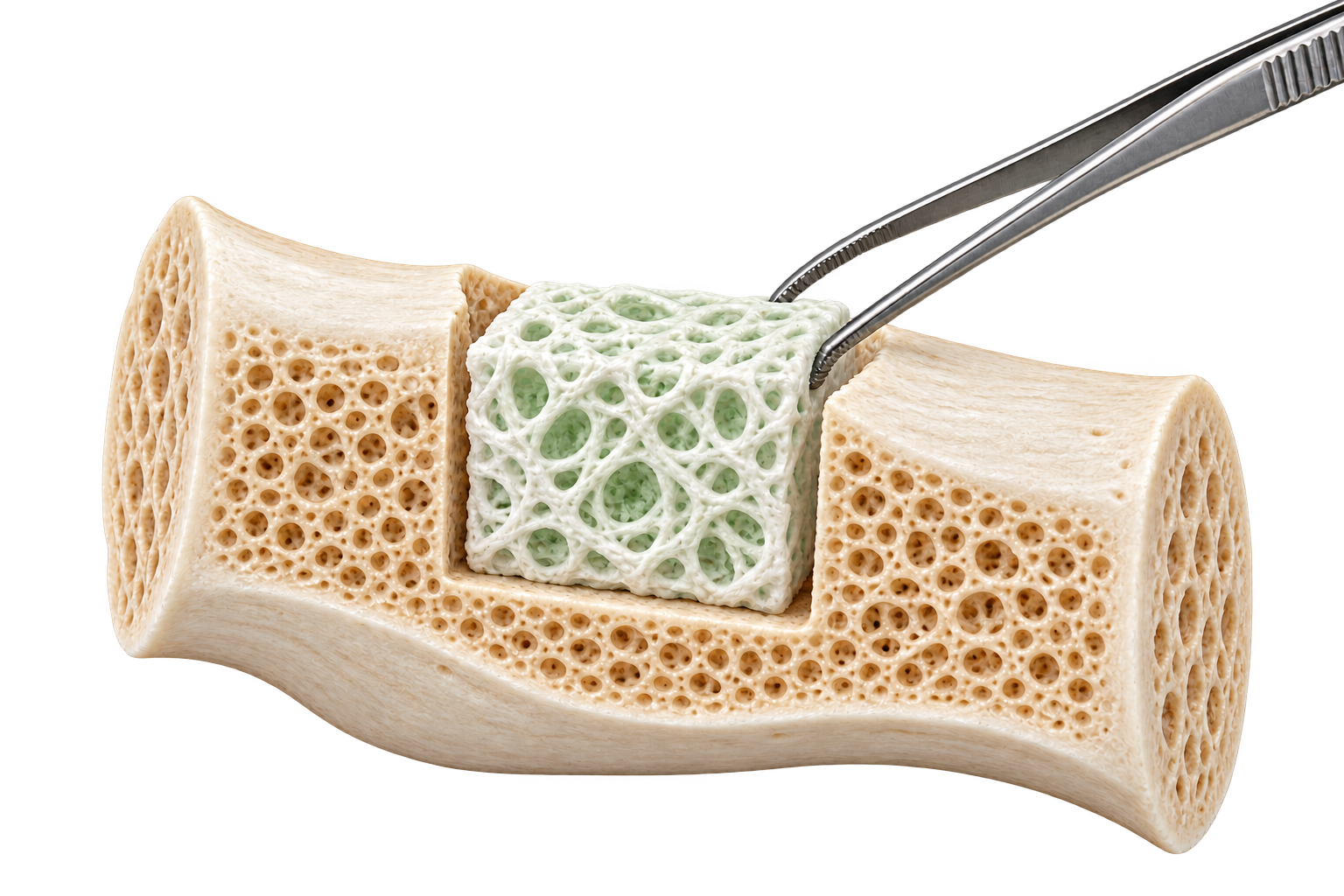
Position the loaded scaffold locally within the prepared bone defect during surgery.
Conceptual workflow and candidate formats; preparation requirements and suitability for each application remain under development.
Scaffold Formats
A preformed structure shaped to fit selected defects.
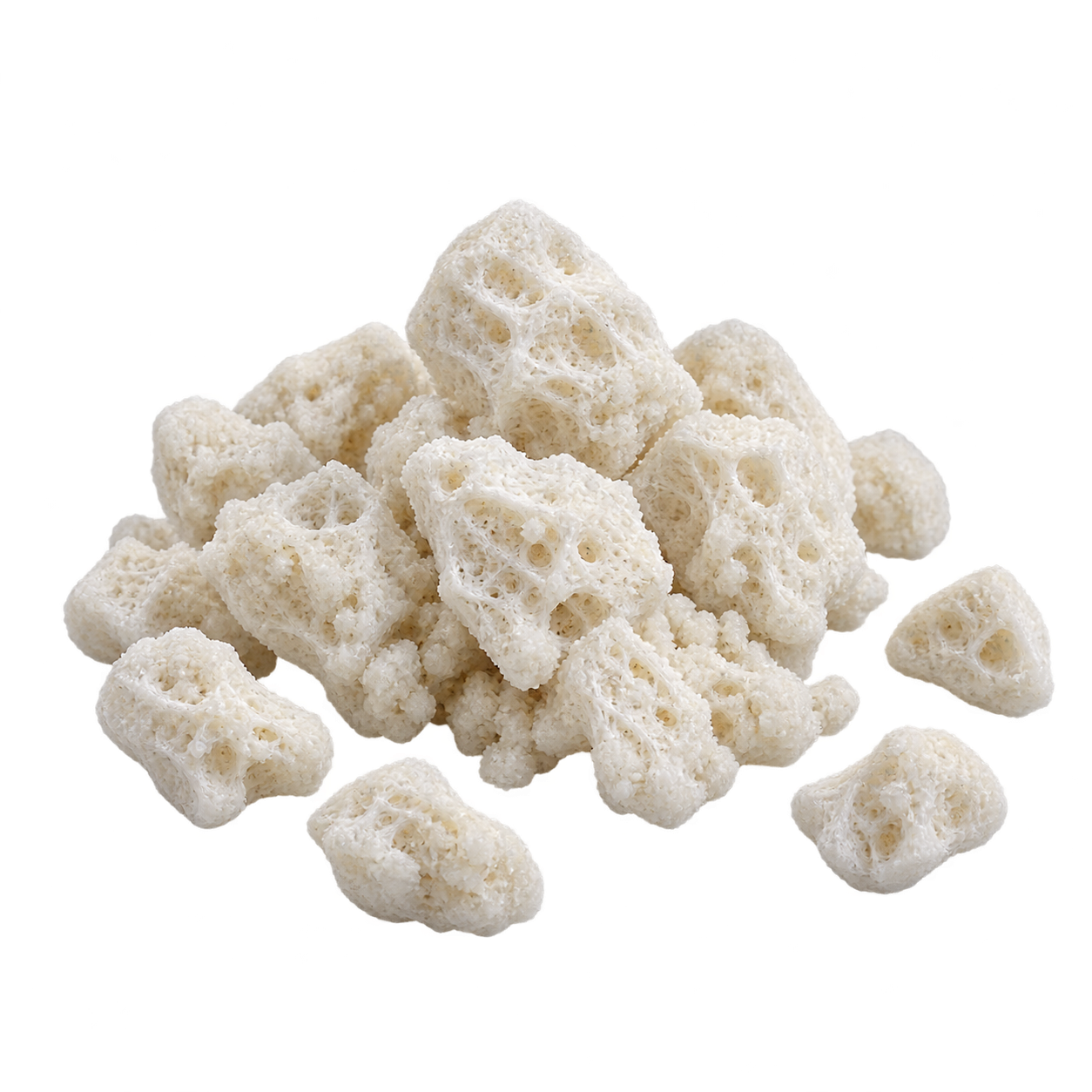
Particles intended to accommodate irregular defect geometries.
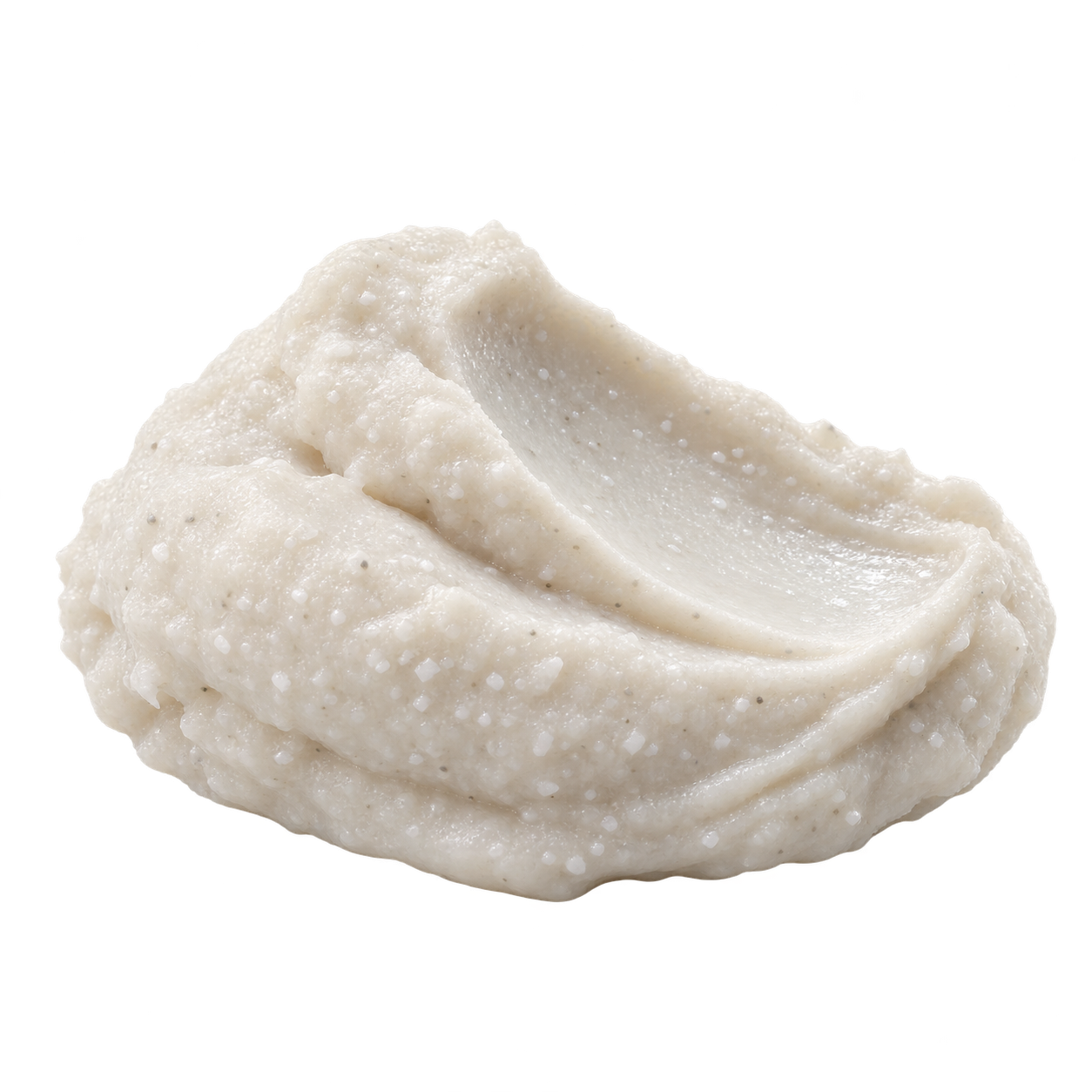
A mouldable formulation adapted to the treatment site.
Candidate formats under development. Material suitability and performance require application-specific validation.
OsteoVetica aims to develop plant-produced recombinant human BMP-2 (rhBMP-2) for local delivery in procedures requiring new bone formation. Proposed areas for investigation include selected dental, oral and maxillofacial, and orthopaedic applications.
Potential applications
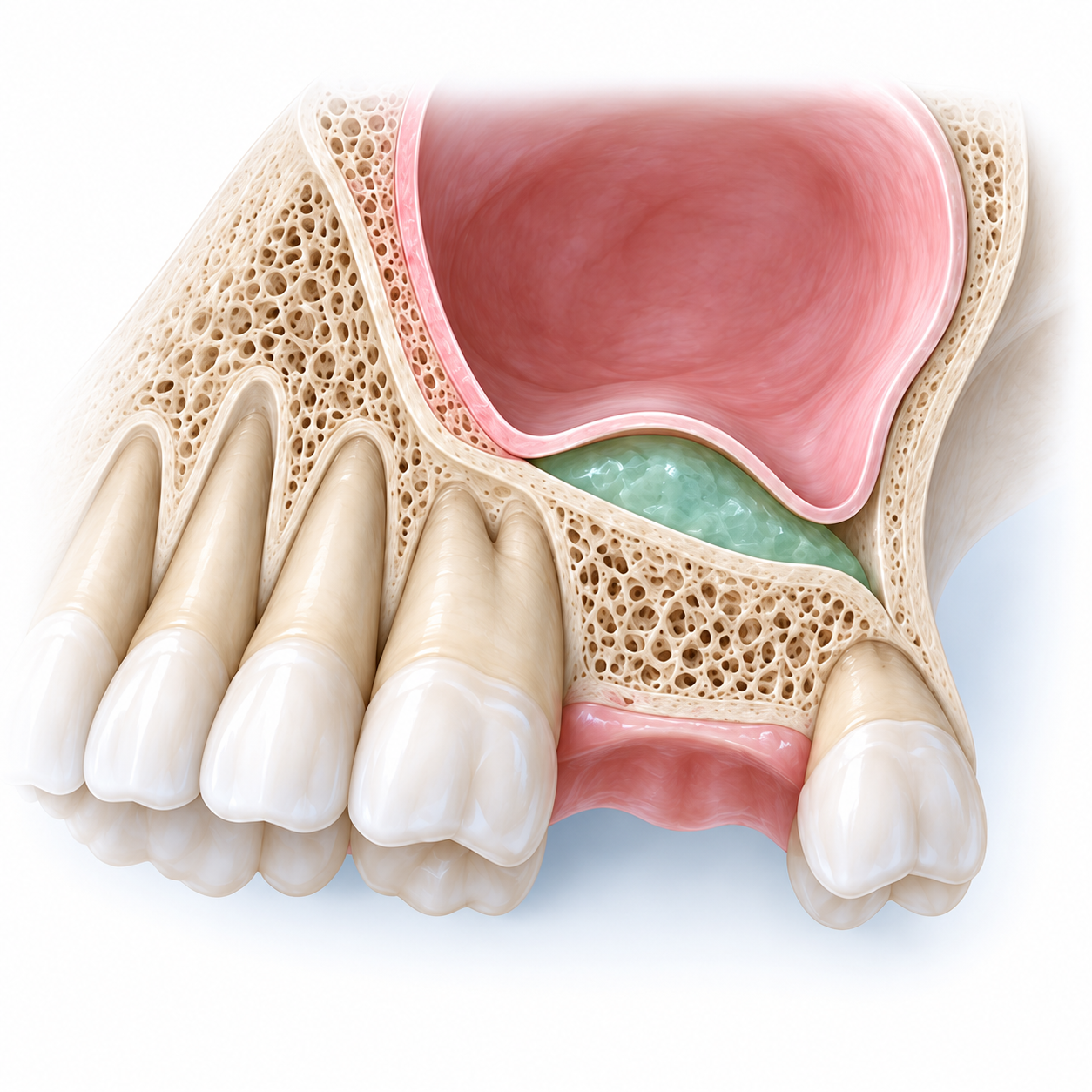
Building bone in the upper jaw before dental implant placement.
Insufficient bone height beneath the maxillary sinus can limit dental implant placement in the posterior upper jaw. Sinus augmentation creates space beneath the sinus membrane for additional bone formation.
OsteoVetica’s proposed development focus is to investigate locally delivered, plant-produced rhBMP-2 to stimulate bone formation within this space.
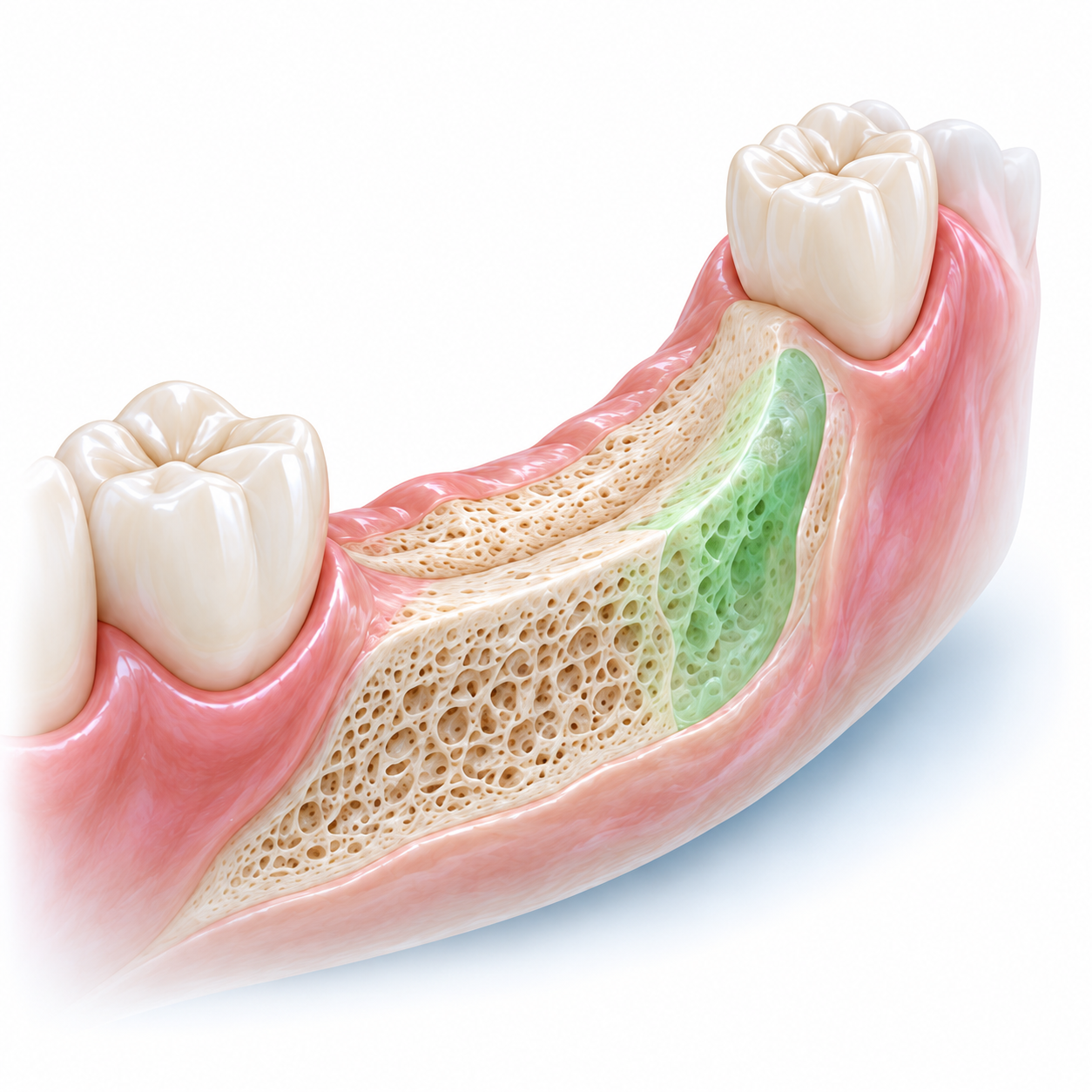
Rebuilding areas of the jaw with insufficient bone volume.
The alveolar ridge is the part of the jaw that supports the teeth. Following tooth loss, trauma or disease, its dimensions may be insufficient for the planned dental reconstruction.
OsteoVetica aims to investigate plant-produced rhBMP-2 for local bone regeneration in selected ridge defects, with the objective of developing adequate bone volume for subsequent implant placement.
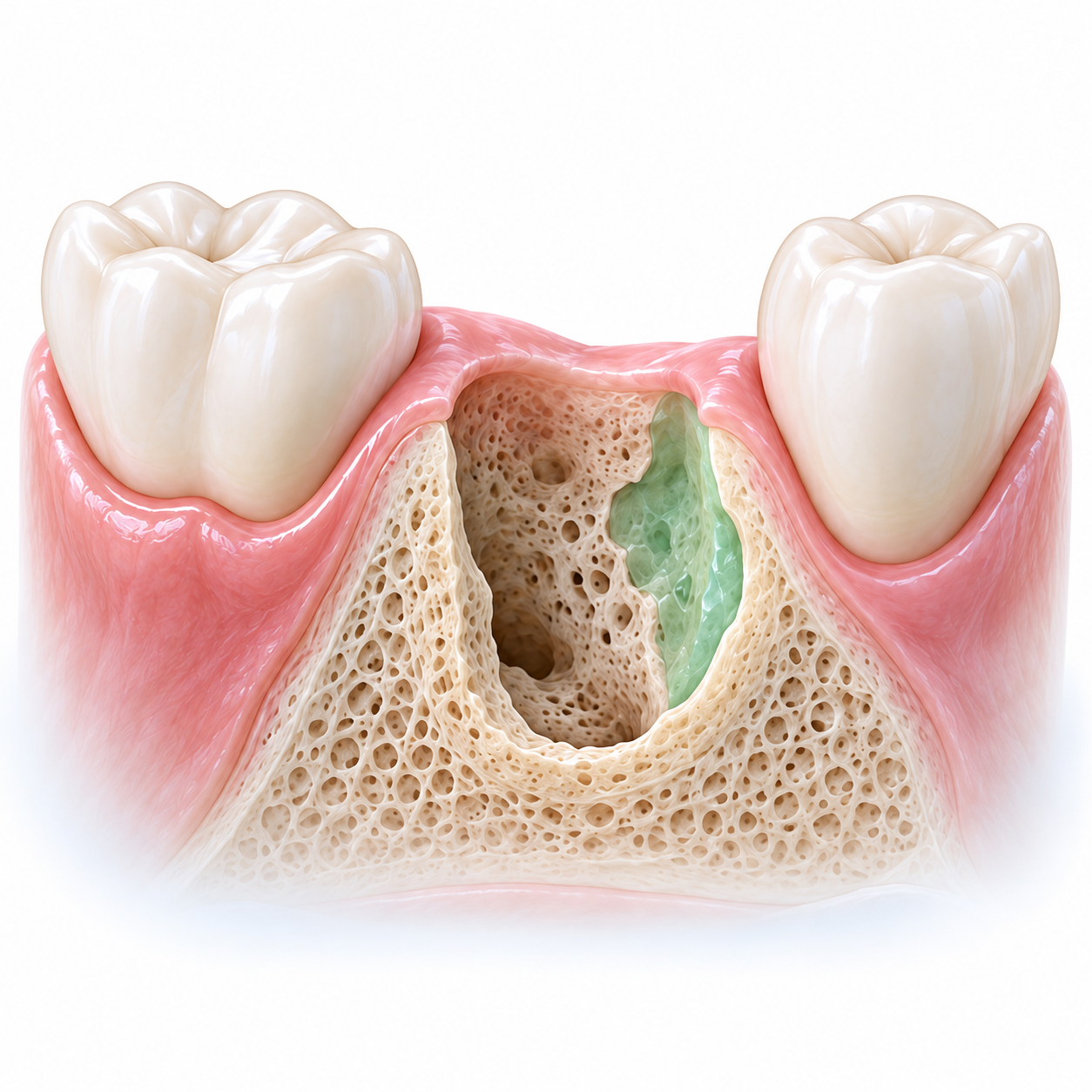
Supporting bone regeneration following tooth removal.
Tooth extraction leaves a socket in the jaw. Where the surrounding bone is damaged or missing, additional regeneration may be needed to prepare the site for future dental reconstruction.
OsteoVetica’s proposed focus is to investigate local delivery of plant-produced rhBMP-2 in selected extraction-related defects to encourage new bone formation.
These are proposed development targets, not approved indications for an OsteoVetica product. Safety and efficacy would need to be established for each intended application.
Bone repair applications
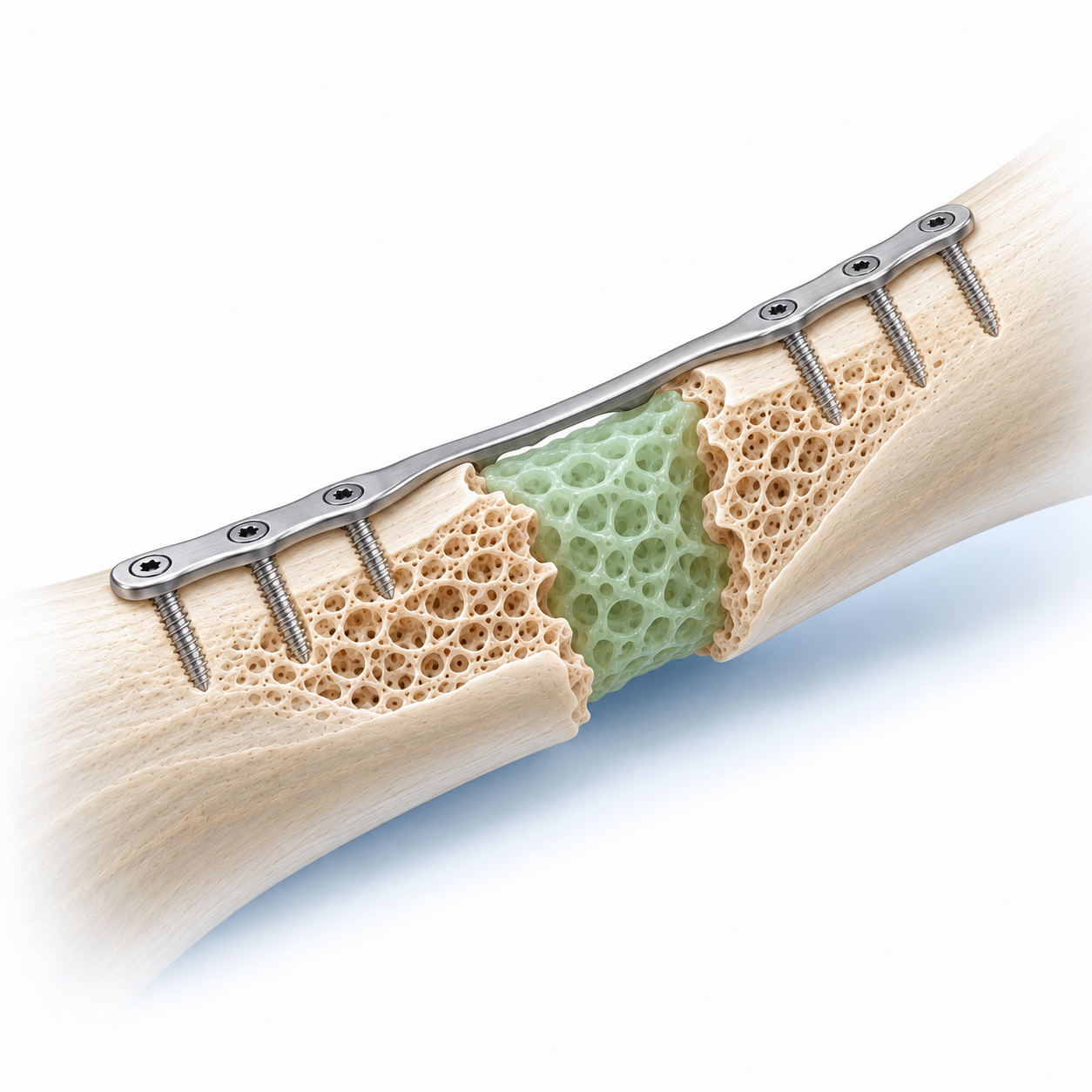
Supporting bone formation in selected severe fractures.
Severe fractures can involve damage to the surrounding bone and loss of bone tissue. Alongside surgical stabilisation, selected cases may require a graft to support repair at the injury site.
OsteoVetica’s proposed development focus is to investigate plant-produced rhBMP-2 delivered through a resorbable scaffold to encourage local bone formation alongside appropriate fracture fixation.
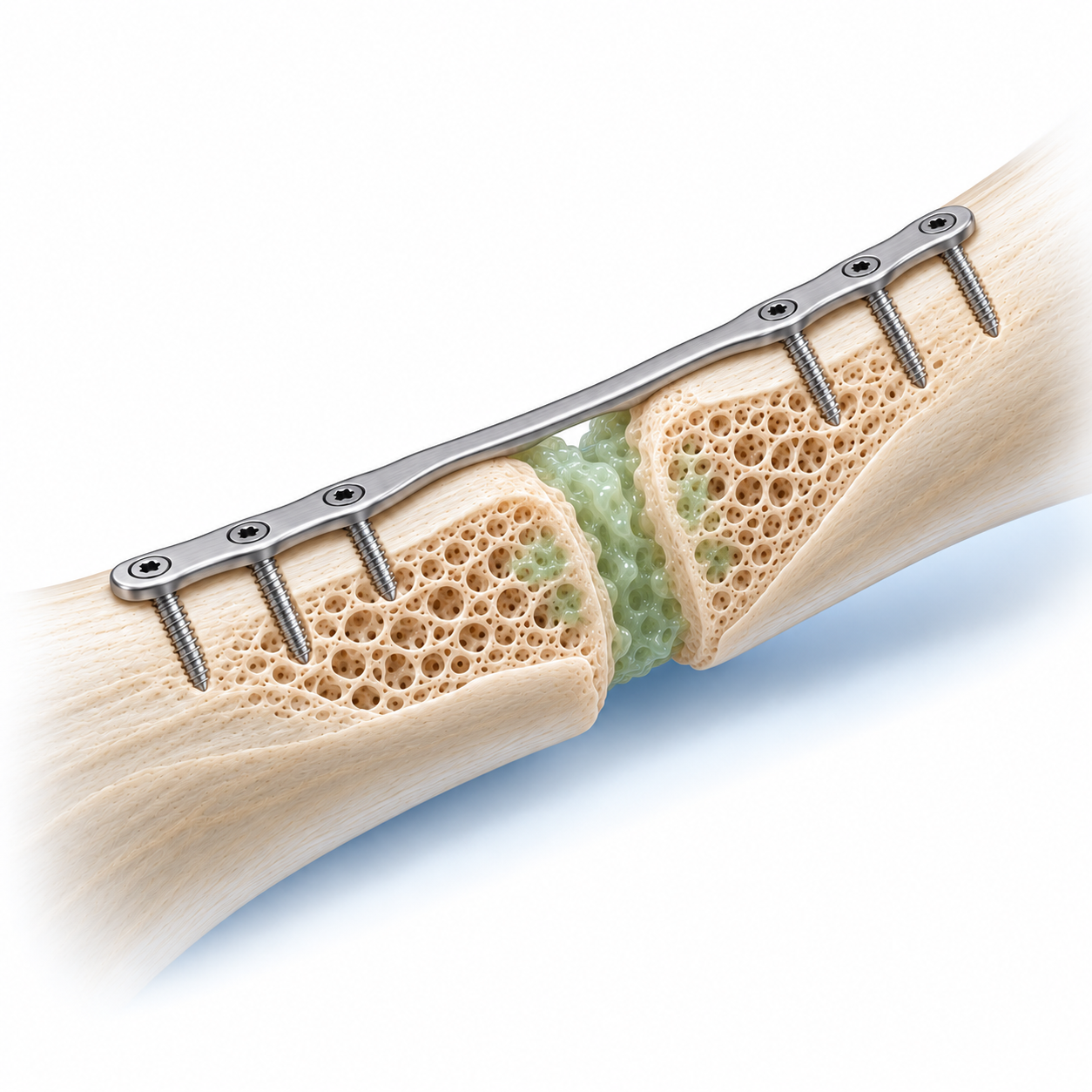
Supporting repair where a fracture has failed to unite.
Some fractures fail to heal, leaving a persistent gap or an incomplete connection between bone segments. Revision surgery may address mechanical stability and the local conditions needed for bone formation.
OsteoVetica aims to investigate a locally retained formulation of plant-produced rhBMP-2 for selected nonunion defects, with the objective of supporting bone formation as an adjunct to revision surgery.
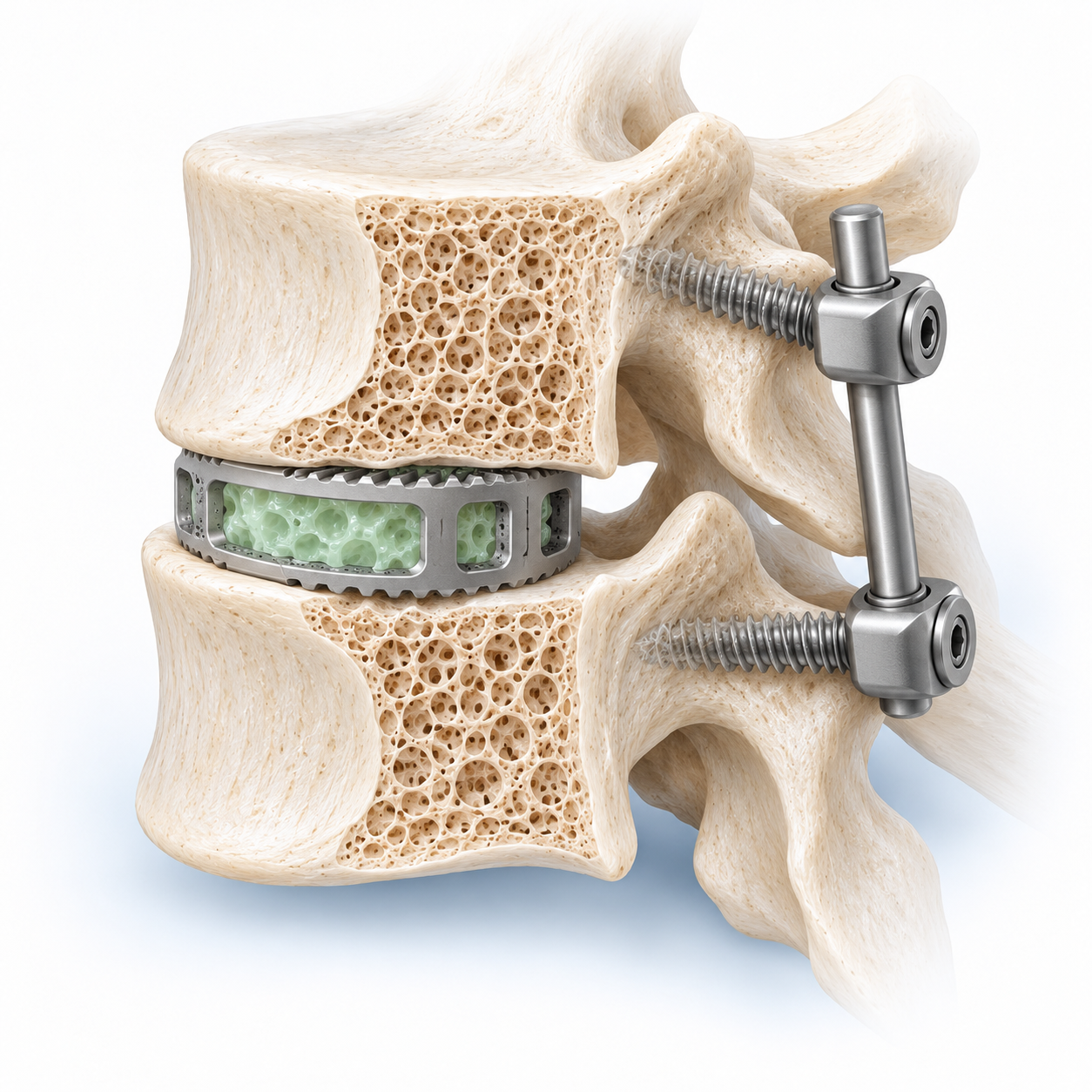
Encouraging bone formation between selected vertebrae.
Spinal fusion aims to create a permanent bony connection between vertebrae. Graft material is placed at the intended fusion site, alongside appropriate implants and stabilisation, to support this process.
OsteoVetica’s proposed focus is to investigate plant-produced rhBMP-2 combined with a suitable scaffold for selected spinal-fusion procedures. Development would evaluate local delivery and compatibility with the intended fusion system.
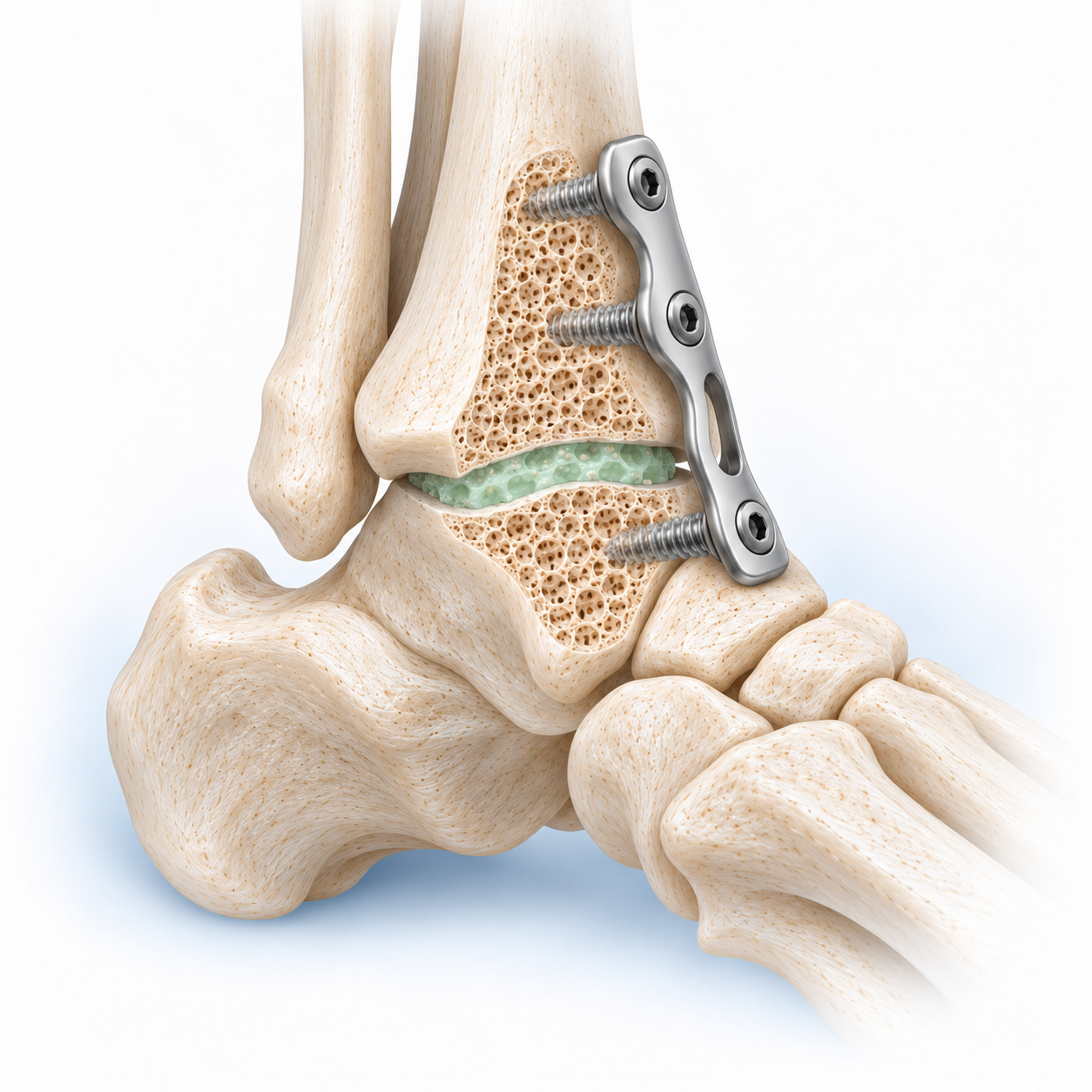
Supporting bone union in selected joint-fusion procedures.
Foot and ankle fusion procedures join selected bones to address conditions requiring surgical stabilisation. The prepared bone surfaces must unite, and some procedures require additional graft material to support bone formation.
OsteoVetica aims to investigate plant-produced rhBMP-2 delivered through a mouldable graft or suitable granules, with the objective of supporting local bone formation at selected fusion sites.
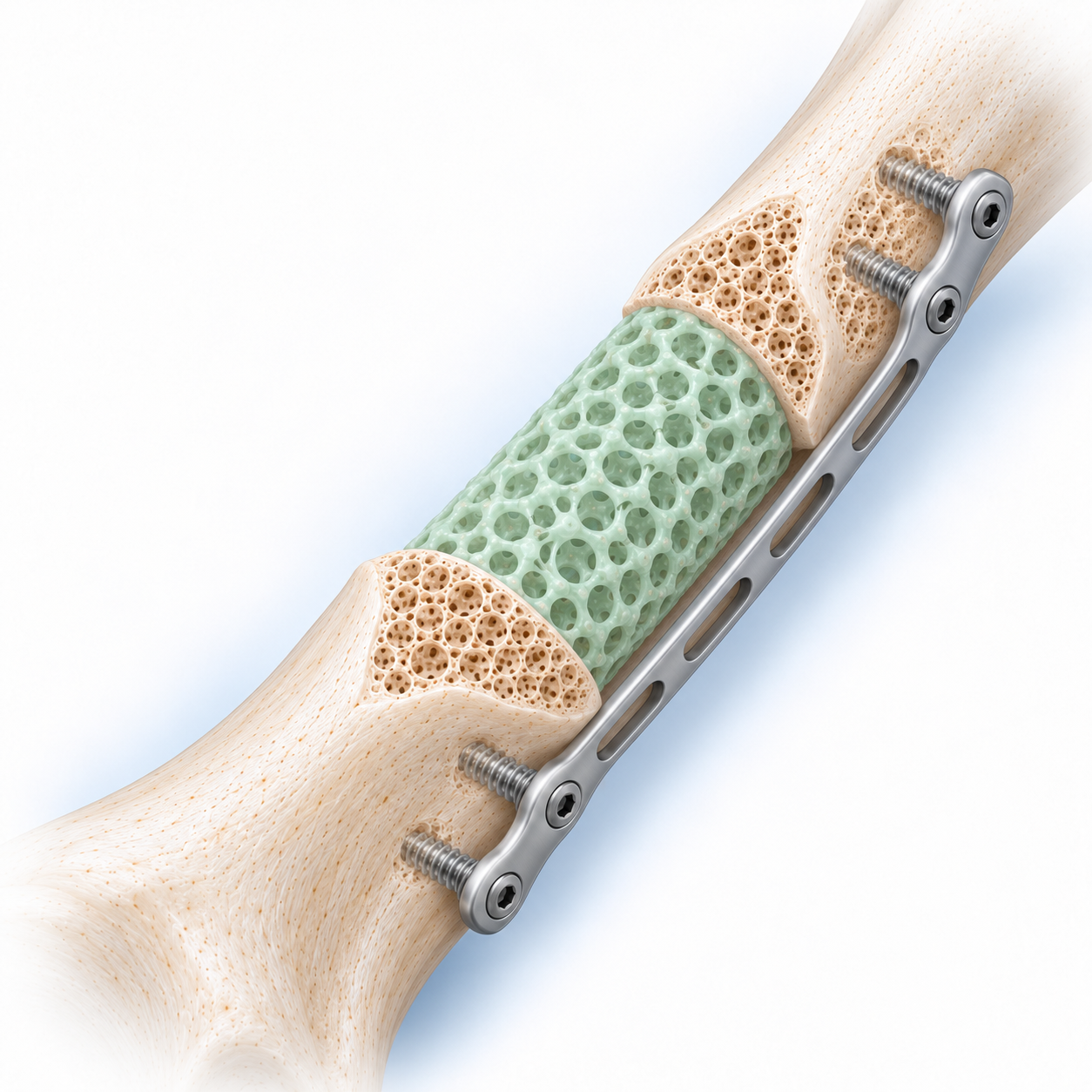
Reconstructing areas where bone has been lost.
Trauma and corrective surgery can leave bone defects that require reconstruction. A suitably designed scaffold can occupy the defect and provide a framework for new bone formation alongside appropriate surgical stabilisation.
OsteoVetica’s proposed development focus is to investigate porous synthetic scaffolds incorporating plant-produced rhBMP-2, with the objective of supporting bone regeneration within selected defects.
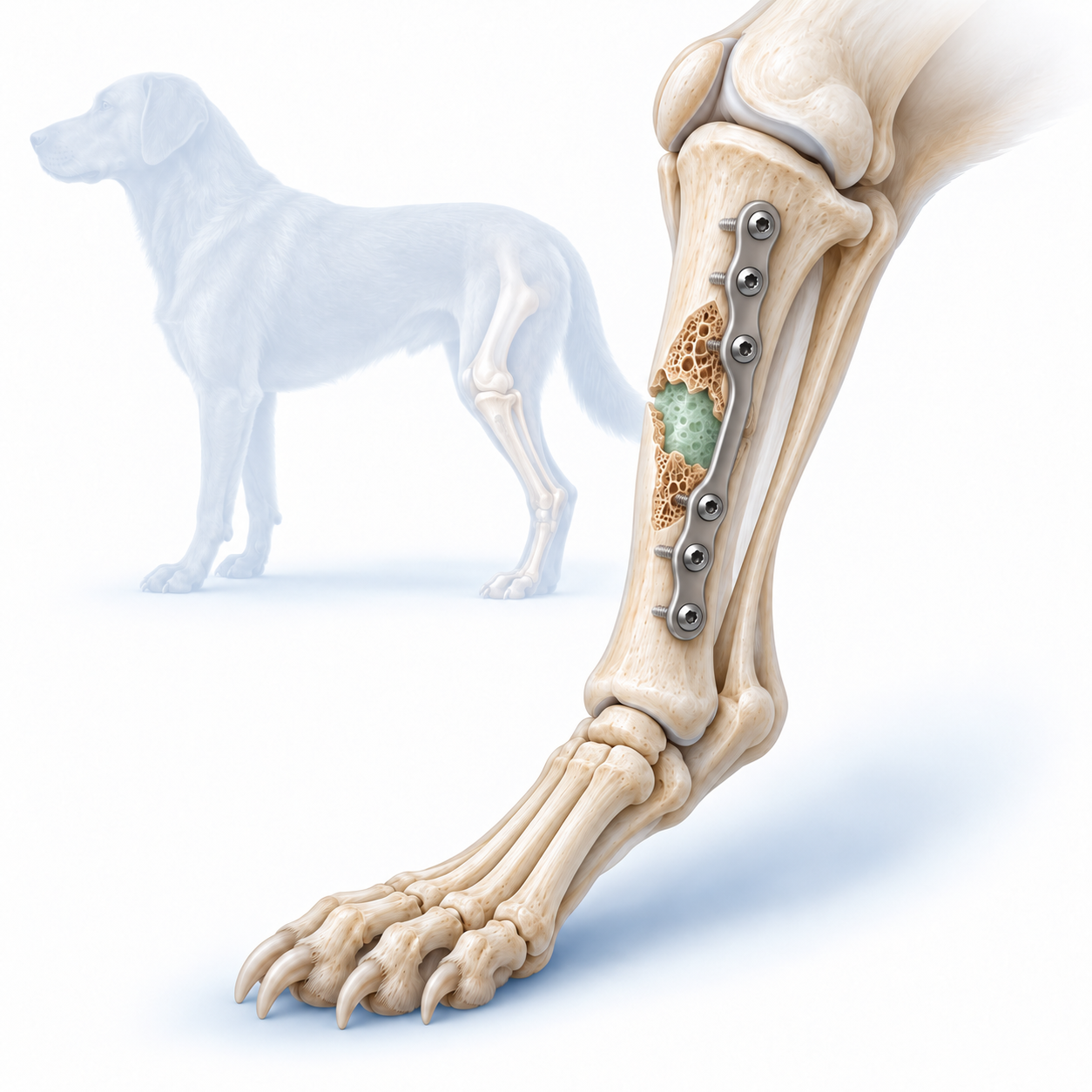
Exploring bone-regeneration applications in animals.
Fractures, nonunions and bone defects can present significant challenges in veterinary surgery. Treatment requirements vary according to the animal’s species, size, anatomy and the procedure being performed.
OsteoVetica aims to investigate plant-produced rhBMP-2 combined with suitable scaffolds for selected veterinary applications. Development would evaluate species- and procedure-specific formulations as an adjunct to appropriate surgical treatment.
These are proposed development targets, not approved indications for an OsteoVetica product. Safety and efficacy would need to be established for each intended application.
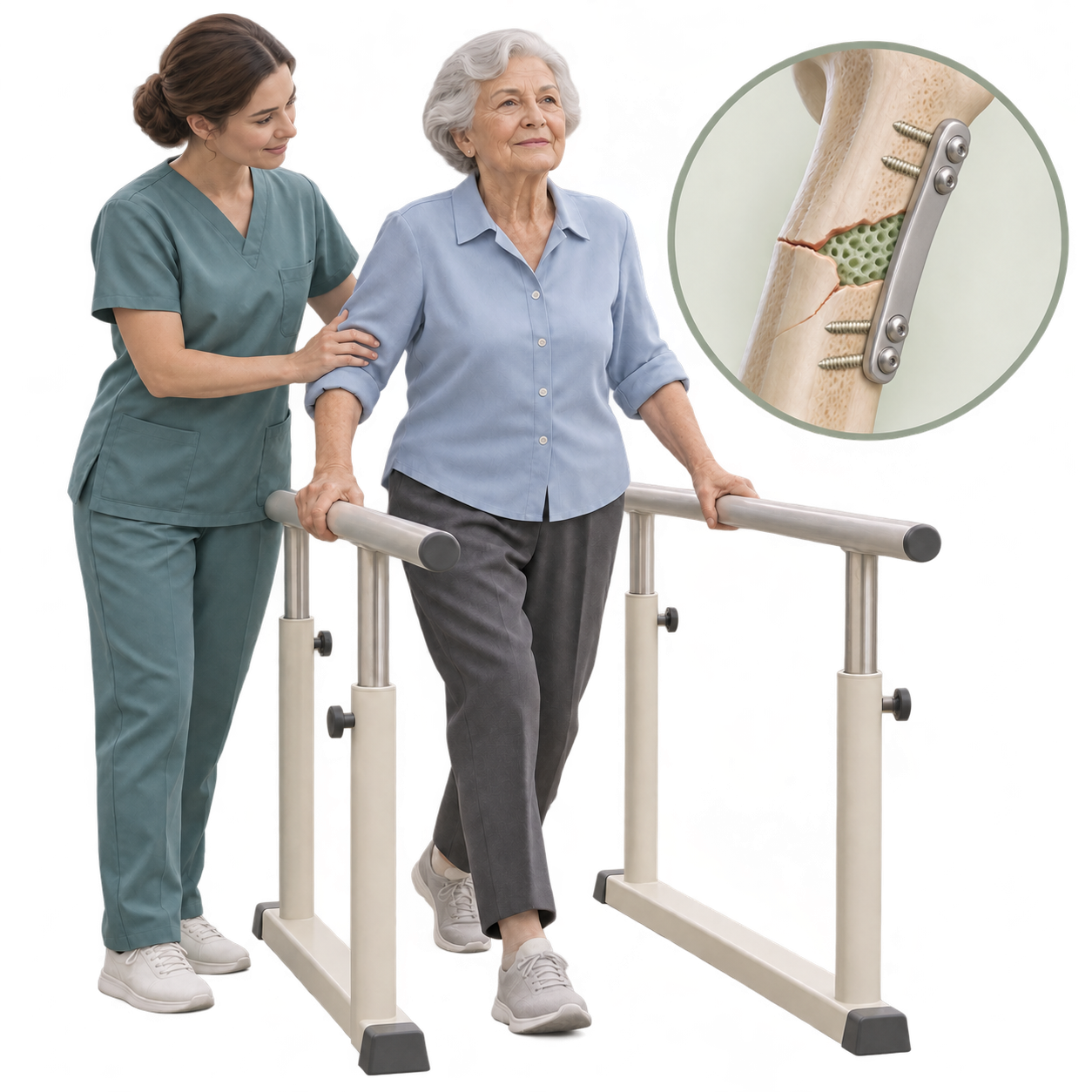
OsteoVetica proposes investigating plant-produced rhBMP-2 delivered on a porous cellulose–mineral scaffold to support local bone formation in selected older adults undergoing surgical repair of fractures or bone defects.
Development would evaluate bone healing and safety. Future clinical studies could also assess mobility and functional recovery during rehabilitation.
This is a proposed development area. Safety and efficacy would need to be established for each intended application.
OsteoVetica proposes combining plant-produced recombinant human BMP-2 (rhBMP-2) with a porous cellulose–mineral scaffold designed without animal-derived collagen.
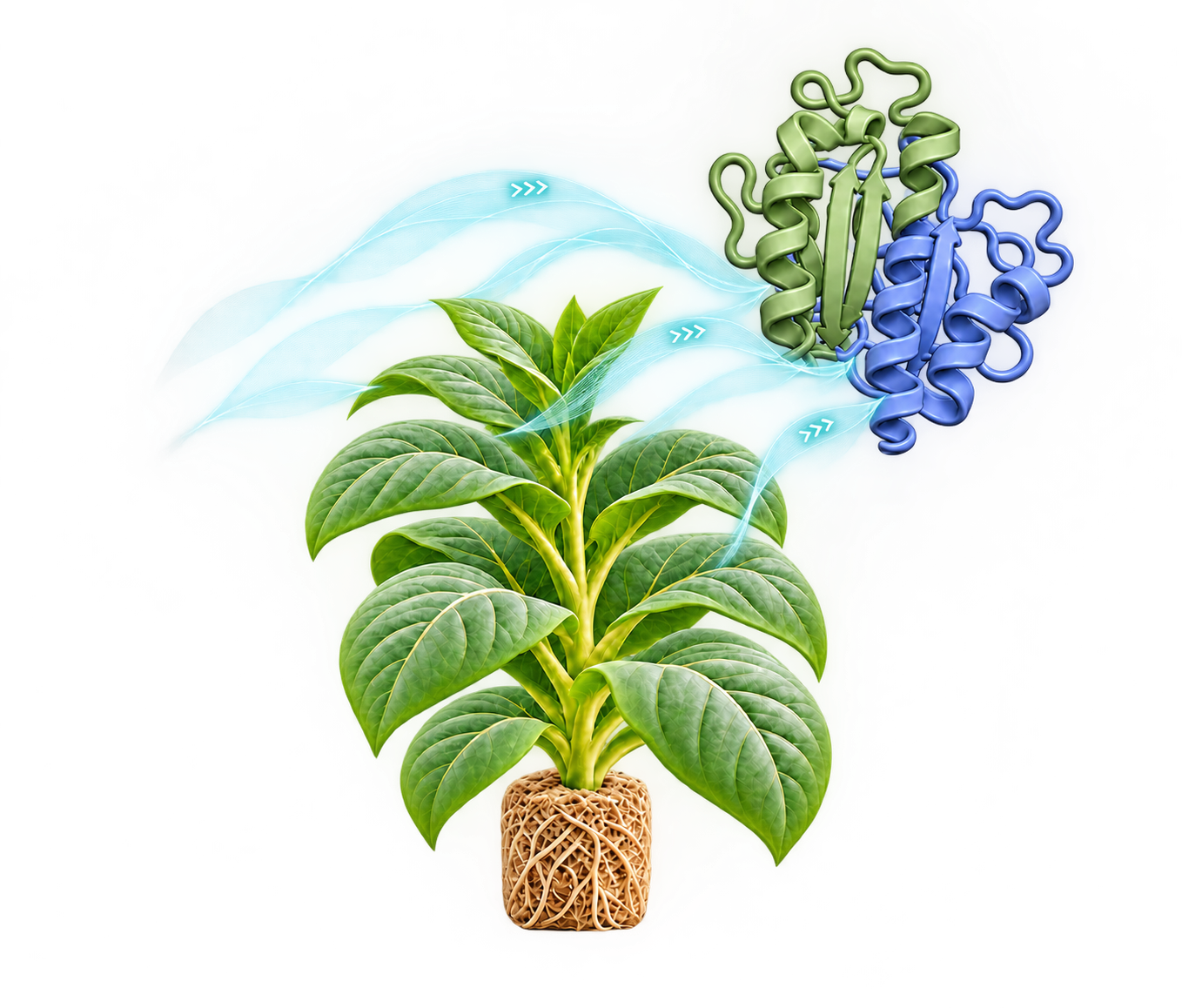
The proposed process uses plants as the expression host for rhBMP-2.
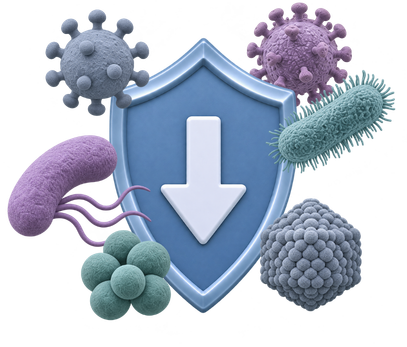
Using plants as the expression host could reduce the risk of introducing pathogens associated with mammalian cell culture.

Plant-produced rhBMP-2 may address religious, ethical or personal concerns about the use of mammalian cells in protein production.

OsteoVetica proposes a porous cellulose–mineral scaffold designed without collagen to carry plant-produced rhBMP-2 for local delivery at the bone defect.

The proposed scaffold would avoid the need to source animal-derived collagen and trace its animal origin.
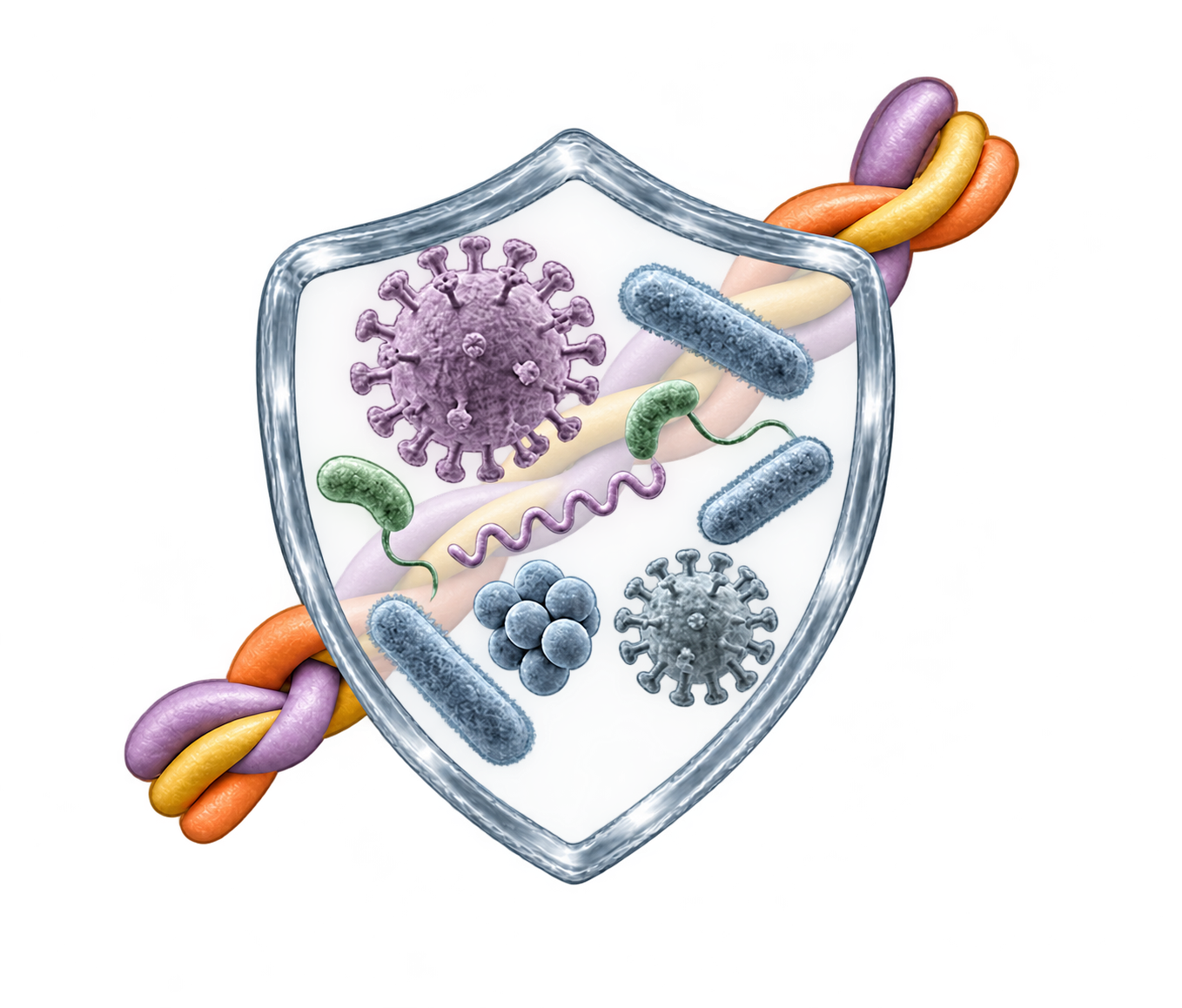
Omitting animal-derived collagen removes that ingredient as a potential source of animal-origin pathogens.

Expand biomass production by increasing the cultivated area where site conditions and regulatory requirements permit.
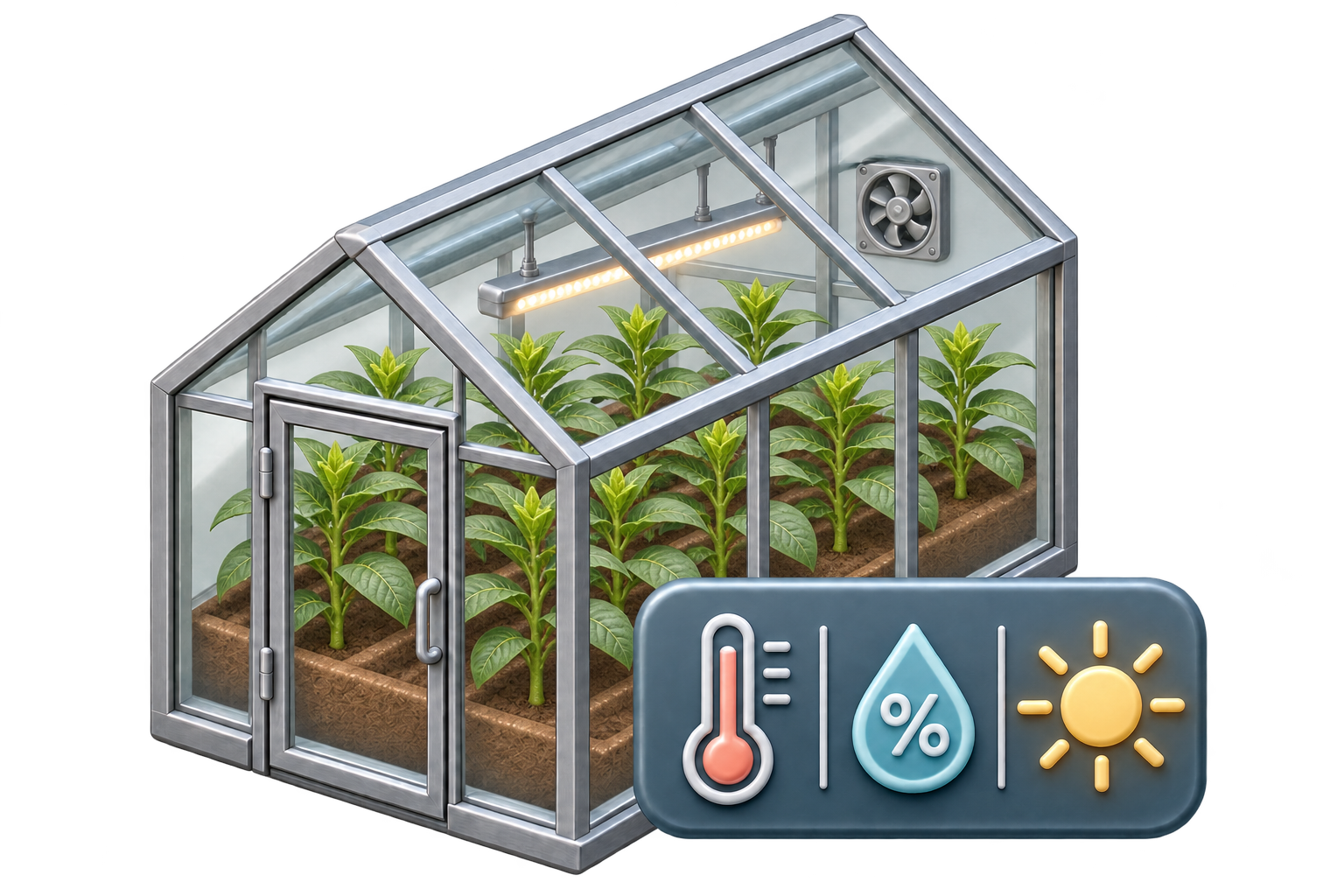
Use greenhouses or indoor facilities to control growing conditions and help reduce variability between harvests.
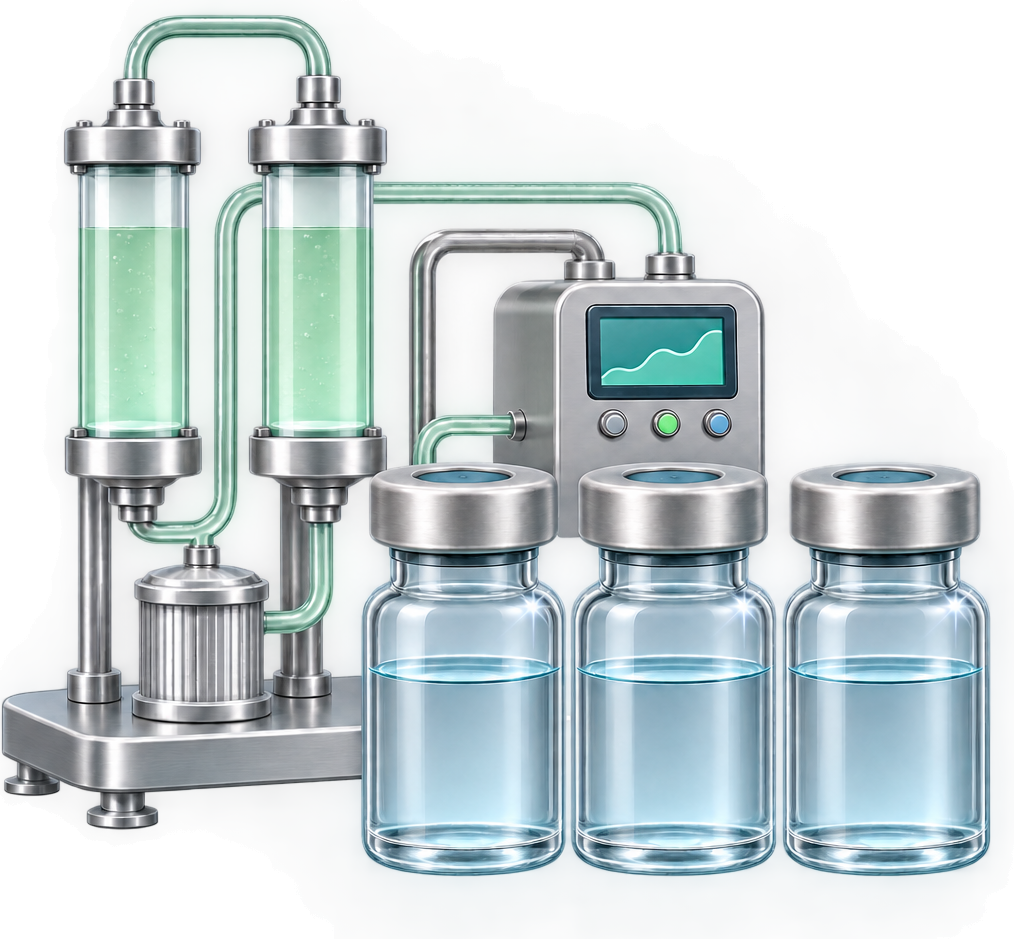
Develop and test a purification process designed to meet defined rhBMP-2 purity specifications across batches.
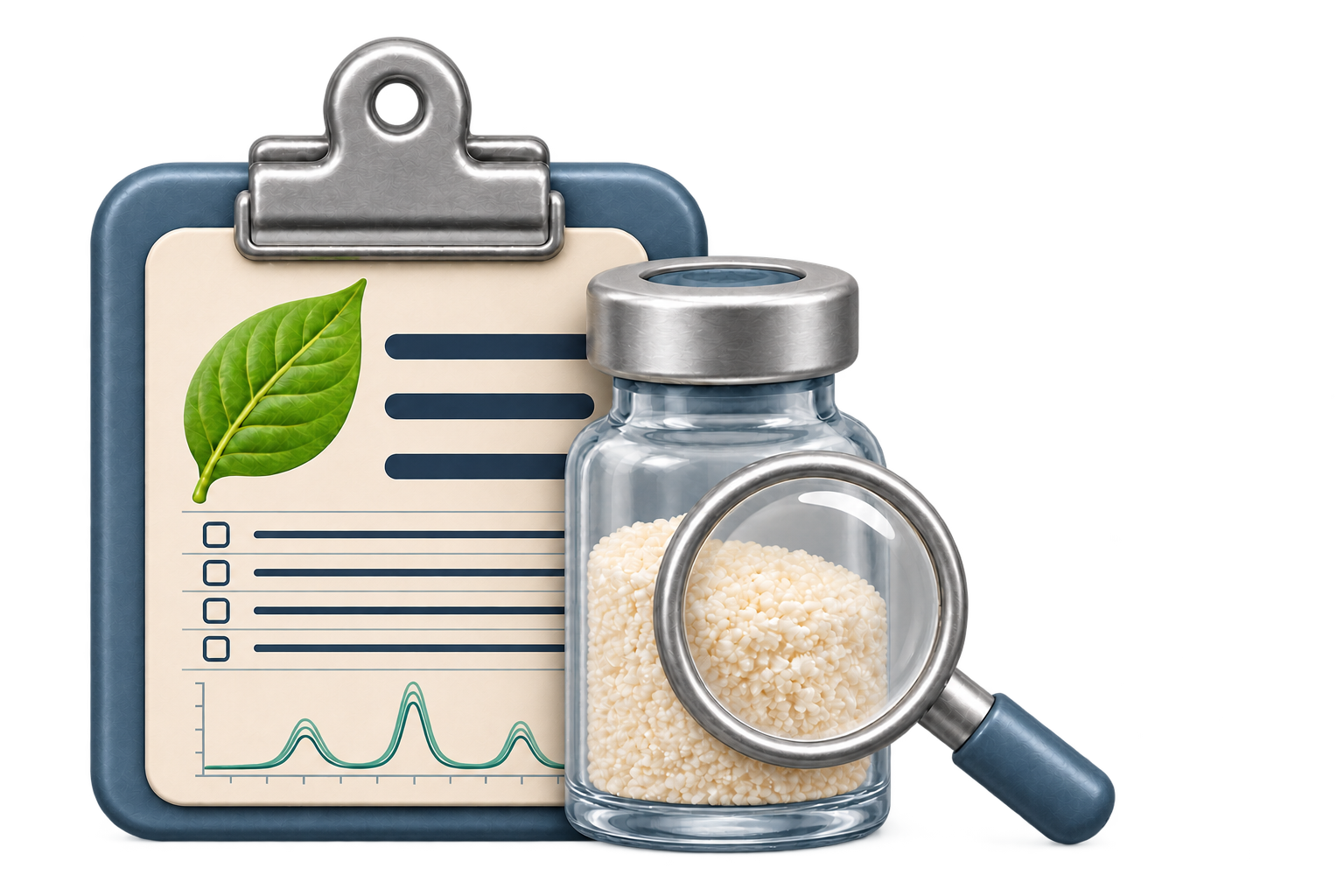
Document the plant expression host and manufacturing inputs, establish process controls, and test purified rhBMP-2 for identity, purity and biological activity.
These are development objectives. OsteoVetica will evaluate cultivation feasibility, batch-to-batch purity and contamination controls during process development.
Development
Planned workstreams
Evaluate plant expression, protein recovery, and purification.
Assess identity, purity, consistency, and biological activity.
Investigate suitable carriers or scaffolds and local-delivery performance.
Define the evidence and development pathway required for the intended product.
OsteoVetica is at an early stage of development. Technical feasibility, safety, efficacy, manufacturing scalability, and regulatory requirements remain to be established.
Collaboration
We welcome discussions with collaborators in plant biotechnology, protein development, biomaterials, oral and maxillofacial surgery, and regulatory science.